


Table of Contents
- Can You Shower With Stainless Steel Jewelry?
- Why Stainless Steel Resists Water Damage
- Is Gold Plated Jewelry Waterproof?
- Factors That Affect Your Jewelry's Longevity
- How to Clean Stainless Steel Jewelry
- Best Practices for Daily Wear
- Frequently Asked Questions
Last Updated: September 30, 2026
Can You Shower With Stainless Steel Jewelry?
Yes, can you shower with stainless steel jewelry? Absolutely, stainless steel is one of the most water-resistant metals available for jewelry. Stainless steel is one of the most water-resistant metals available for jewelry, making it ideal for daily wear including showers, swimming, and gym sessions. The metal resists corrosion and tarnishing, so water exposure won't damage it the way it might damage other materials.

But there's a catch. Not all stainless steel jewelry is created equal, and the longevity of your pieces depends on several factors beyond just the metal itself. Water exposure combined with soap residue, body wash, chlorine, and salt water can gradually affect your jewelry's appearance and finish. Understanding what makes stainless steel durable and how to care for it properly will help your pieces last for years.
At GRISÉ NYC, we craft stainless steel jewelry specifically designed to withstand daily wear, including showers and active lifestyles. Our pieces undergo rigorous testing to ensure they maintain their shine and integrity through moisture exposure. Here's what you need to know about wearing stainless steel jewelry in the shower and beyond.
Why Stainless Steel Resists Water Damage
Stainless steel resists water damage because of its unique molecular structure. The metal contains chromium, which creates a protective oxide layer on the surface. This invisible barrier prevents the underlying steel from reacting with water and oxygen, which is what causes rust and corrosion in regular steel.
When you expose stainless steel to water, the chromium oxide layer stays intact and protects the metal underneath. This is why stainless steel doesn't rust like traditional iron-based metals do. The barrier continuously repairs itself when damaged, as long as oxygen is present in the environment.
Different grades of stainless steel offer varying levels of protection.
The key difference between stainless steel and other jewelry metals comes down to oxidation resistance. While gold and silver can tarnish or develop patina over time, stainless steel's chromium oxide layer prevents this chemical reaction from happening. This makes it tarnish-resistant for everyday wear.
Is Gold Plated Jewelry Waterproof?
Gold-plated jewelry is water-resistant but not waterproof in the way solid stainless steel is. The gold plating itself doesn't absorb water, but the underlying base metal and the adhesive bond between the plating and the base can be affected by prolonged moisture exposure.

Gold plating is a thin layer of gold applied to a base metal, usually brass or copper. The thickness of this plating determines how long it will last. With proper care, 18k gold-plated jewelry can last 2 to 3 years. However, regular shower exposure accelerates the wearing process.
The Difference Between Solid and Plated
Solid stainless steel jewelry consists of the same material throughout. There's no coating or layer that can wear away. When you shower with solid stainless steel, the entire piece remains unchanged because the chromium oxide layer protects it continuously.
Gold-plated jewelry has a different structure. The gold layer sits on top of a base metal. Every time you expose plated jewelry to water, soap, and friction, the plating gradually wears away. This reveals the base metal underneath, which may tarnish, discolor, or cause skin sensitivity.
The adhesion between the gold plating and the base metal matters greatly. Poor adhesion means the plating flakes off faster. High-quality plating uses proper surface preparation and bonding techniques to extend the life of the piece.
With solid stainless steel, you don't have this concern. The metal is uniform, so there's no plating to wear away. This is why stainless steel jewelry lasts a lifetime with proper care, while gold-plated pieces have a limited lifespan.
Factors That Affect Your Jewelry's Longevity
Water alone is not the primary threat to stainless steel jewelry. The real culprits are the substances in the water and how they interact with your specific jewelry type. Understanding these factors requires knowing whether your piece is solid stainless steel or plated, a distinction that fundamentally changes how vulnerable it is to damage.
Solid Stainless Steel vs. Plated: Why the Difference Matters
Solid stainless steel (typically 304 or 316L grade) has chromium distributed throughout the entire piece. When exposed to water and soap, the chromium oxide protective layer regenerates continuously. Even if the surface is scratched or exposed to mild chemicals, the underlying metal remains protected.
Plated stainless steel or gold-plated jewelry has a different vulnerability profile. The plating sits on top of a base metal. Water, soap residue, and friction gradually wear away the plating, exposing the base metal beneath. Once exposed, that base metal can tarnish, discolor, or trigger skin sensitivity, even if the plating itself was stainless steel.
This distinction is critical: if your jewelry is plated, shower exposure accelerates plating wear. If it's solid stainless steel, showers pose minimal risk as long as you rinse and dry properly.
How to Identify Your Jewelry Type
Check the product description or packaging for these markers:
- "Solid stainless steel" = solid throughout, safe for daily shower wear
- "Stainless steel plated" or "gold-plated over stainless steel" = has a coating that will wear away
- No material specification listed = likely plated; assume it's not shower-safe
If you can't find the material specification, assume the piece is plated and treat it accordingly.
Medium Steel Hoop Earrings - 25mm →
Soap Residue and Body Wash Impact
Soap and body wash don't damage solid stainless steel directly, but they leave residue that builds up over time and can dull the finish. The problem worsens depending on your water type and soap chemistry.
Residual soap accumulates in crevices, joints, and textured areas of your jewelry. If left sitting on the surface, it hardens and becomes difficult to remove. The longer residue stays on your jewelry, the more it can interact with the metal's finish and trap moisture underneath.
Hard water makes this problem significantly worse. Minerals in hard water (calcium and magnesium) combine with soap to create stubborn deposits. These mineral deposits are particularly visible on shiny stainless steel surfaces and can create a cloudy or dull appearance.
For plated jewelry, soap residue accelerates plating wear by creating a moist environment that promotes friction and adhesion breakdown between the plating and base metal.
The solution is simple: rinse your jewelry immediately after showering with clean water. A quick 10-second rinse removes most soap and mineral residue before it has a chance to build up or trap moisture.
Chlorine and Salt Water Exposure
Chlorine is more aggressive than regular shower water. Swimming pools contain chlorine to kill bacteria, but the chemical can affect even solid stainless steel over extended periods. Repeated chlorine exposure gradually degrades the chromium oxide layer, particularly in lower-grade stainless steel.
Salt water poses a similar challenge. The salt in ocean water and salt pools is more corrosive than fresh water because chloride ions actively attack the chromium oxide layer. It accelerates the breakdown of protective layers on both solid and plated jewelry.
If you swim regularly, remove your jewelry before entering the pool or ocean. This is the best protection for any jewelry, regardless of material. Even solid stainless steel benefits from avoiding unnecessary chemical exposure.
For occasional swimming, solid stainless steel will hold up better than gold-plated jewelry. The solid metal is more resistant to chemical attack. However, gold-plated pieces will show visible damage more quickly, the plating can flake off within weeks of regular pool exposure.
How to Clean Stainless Steel Jewelry
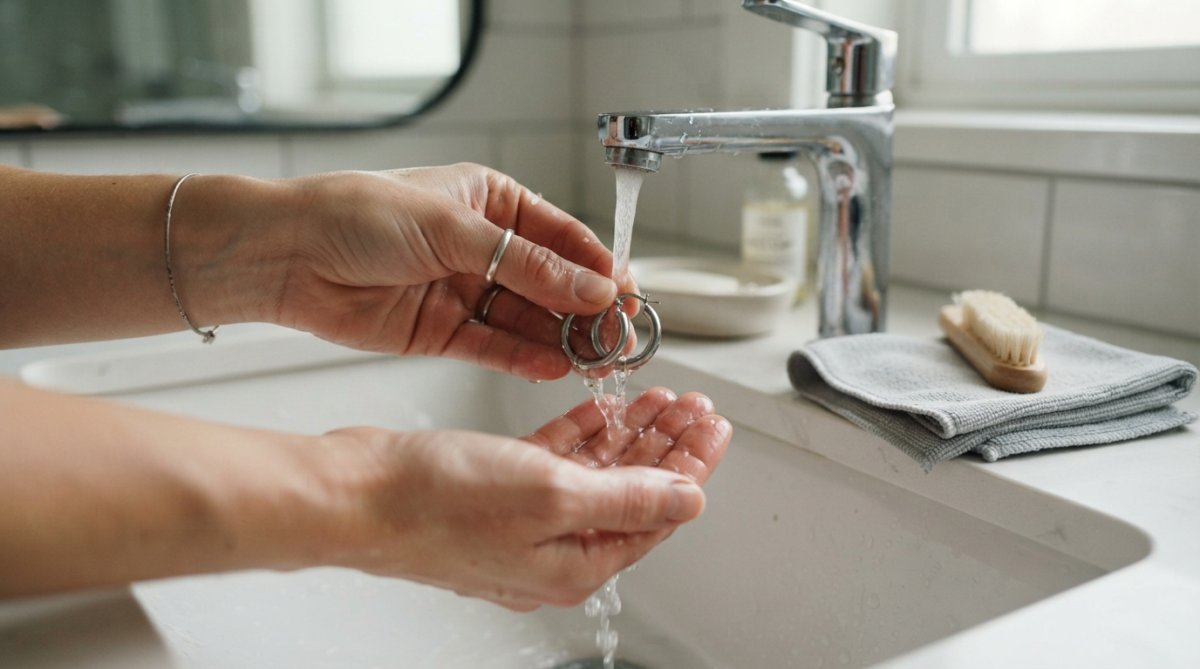
Proper cleaning removes residue and restores shine without damaging the metal. Regular cleaning also helps you spot any issues early before they become serious problems.
Step-by-Step Cleaning Process
Step 1: Prepare Your Materials Gather warm water, mild dish soap, and a soft microfiber cloth. You don't need special jewelry cleaners, basic household items work perfectly for stainless steel.
Step 2: Soak Your Jewelry Place your stainless steel jewelry in warm soapy water for 5 to 10 minutes. The warm water helps loosen residue and mineral deposits.
Step 3: Gently Scrub Use a soft brush or cloth to gently scrub the jewelry. Pay special attention to crevices and joints where residue accumulates.
Drying Your Jewelry Properly
Drying is as important as cleaning. Water left on jewelry creates mineral deposits and can trap moisture in crevices. Use a soft, lint-free microfiber cloth to dry your pieces immediately after rinsing.
Best Practices for Daily Wear
Showering with stainless steel jewelry is safe when you follow a few simple practices. These habits will keep your pieces looking new and prevent damage over time.
Frequently Asked Questions
Is stainless steel jewelry okay to get wet?
Yes, stainless steel jewelry is completely safe to get wet. Its low-carbon grade composition makes it highly resistant to corrosion and oxidation, so shower water, chlorine, and salt water won't damage it. The metal's structure prevents rust and tarnish even with regular moisture exposure, making it ideal for daily wear in active lifestyles.
How do I clean stainless steel jewelry after showering?
Rinse your stainless steel jewelry with fresh water immediately after showering to remove soap residue and minerals. Gently pat dry with a soft microfiber cloth to prevent water spots and maintain shine. For deeper cleaning, use warm water with a drop of mild dish soap, scrub gently with a soft brush, rinse thoroughly, and dry completely. This prevents residue buildup that can dull the finish over time.
Is gold plated jewelry waterproof?
Gold-plated jewelry is water-resistant but not fully waterproof. The thin layer of plating can wear away with frequent water exposure, soap, and friction, revealing the base metal underneath. With proper care, quality 18k gold-plated jewelry lasts 2 to 3 years, while solid stainless steel lasts a lifetime. Avoid showering with gold-plated pieces regularly to extend their lifespan.
What jewelry can you not shower with?
Avoid showering with costume jewelry, low-quality plated pieces, and jewelry with porous stones like pearls or opals. Frequently showering with gold-plated jewelry accelerates plating wear. Pieces with adhesive-set stones risk losing them in water. Solid stainless steel is a safe choice for daily shower wear, unlike delicate or vintage pieces.

