


Table of Contents
- Why Layered Gold Necklaces Tangle and How to Prevent It
- Best Necklace Lengths for Layering
- How to Keep Layered Necklaces from Tangling
- Using a Necklace Layering Clasp to Secure Your Stack
- How to Layer Three Necklaces Without Tangling
- Gold-Specific Care and Material Compatibility
- Troubleshooting Tangled Necklaces by Cause
- Frequently Asked Questions
Last Updated: October 5, 2026
Why Layered Gold Necklaces Tangle and How to Prevent It
Layered gold necklaces create stunning visual depth, but they tangle. At GRISÉ NYC, we've helped thousands of customers build jewelry stacks, and the physics is straightforward.
Chains tangle because they move and shift against each other.
The good news: tangling is preventable with spacing, length variation, and strategic chain selection. Most people skip these factors, then spend five minutes untangling every morning.
This guide covers how to layer gold necklaces without tangling, from spacing rules to chain types that work best together.
Best Necklace Lengths for Layering
The foundation of a tangle-free stack is chain length. Different lengths keep necklaces in separate planes so they can't wrap around each other.
Start with these baseline lengths:
- Shortest layer: 16-18 inches (sits at the collarbone)
- Middle layer: 20-24 inches (sits at the upper chest)
- Longest layer: 28-32 inches (sits lower on the chest)
These lengths create natural separation, so each necklace shifts independently.
The gap between lengths matters more than the exact numbers.
Consider your neckline: crew necks suit shorter chains, V-necks and scoop necks give longer chains room, and high necklines work best with longer layered necklaces that sit below the fabric.
Body type matters too: taller frames handle longer chains, shorter frames suit tighter stacks. Each chain needs its own visual territory.
How to Keep Layered Necklaces from Tangling
The Two-Inch Spacing Rule
The most practical rule is two-inch spacing: leave at least two inches between where each necklace sits on your chest so the chains never touch.
To measure, put on your shortest necklace first and mark where it ends. Each next necklace should start at least two inches below that point.
Two inches is the minimum; three or four is better and makes tangling nearly impossible.
This works because it keeps chains in separate planes: gravity pulls straight down, and the distance prevents the sideways movement that causes knots.
Choosing Chain Weights and Textures
Construction, not just thickness, determines how readily a chain twists into a neighbor. How common styles behave when layered:
- Cable chain: Oval links sit in a repeating pattern. Cable chains are the most forgiving to layer because the links lie relatively flat and don't coil. Pair a cable chain with almost anything.
- Box chain: Square links fit tightly together, giving a smooth, low-friction surface. Box chains slide past other chains rather than gripping them, which makes them strong layering partners.
- Rope chain: Twisted links create a spiral that catches on adjacent chains. Two rope chains at similar lengths will twist together quickly. Pair a rope chain with a smooth box or snake chain instead.
- Snake chain: A tightly wound, smooth surface with almost no gaps. Snake chains glide against other chains, but two snake chains of the same thickness can grip each other because their surfaces match.
- Figaro and curb chains: Flattened links with a repeating pattern. They layer well with smooth chains but can snag on fine, open-link styles.
Weight matters too: a heavier chain resists being pulled into a lighter one's path. Pair a 4mm with a 1mm and the heavier stays put while the lighter moves around it.

Texture is the third variable: smooth-on-smooth slides, textured-on-textured grips. Mixing a smooth snake chain with a textured rope chain reduces friction because the surfaces don't interlock.
Avoid pairing identical chains at different lengths, two snake chains of the same weight and texture tangle readily. If you love a style, vary the thickness: 2mm and 4mm behave very differently.
Matching Chain Type to the Rest of Your Stack
Chain type also affects how a necklace sits and moves.
- Fine chains under 1.5mm move the most and tangle the fastest. Give them the widest spacing in your stack, three inches or more.
- Mid-weight chains (2-3mm) are the workhorses of a layered stack. They hold their position without weighing down your neck.
- Heavy chains (4mm and up) anchor a stack. Put them at the longest layer so gravity keeps them in place and shorter chains can move above them without catching.
Treat a pendant chain as its own layer: the pendant's weight changes how the chain hangs, so give it at least two and a half inches of spacing.
Using a Necklace Layering Clasp to Secure Your Stack
A necklace layering clasp attaches to multiple chains at one point, keeping them organized and preventing them from sliding around independently.
To use a necklace layering clasp, attach each chain to it using jump rings.
The advantage: chains can't shift relative to each other because they're physically connected at one point, especially helpful for delicate chains, since everything moves as a unit.
Layering clasps work best with three or more necklaces. For two-chain stacks they're helpful but less critical; for five or more, they become essential.
How to Layer Three Necklaces Without Tangling
Step-by-Step Setup
Building a three-necklace stack follows a clear sequence.
Step 1: Choose your three chains. Pick lengths of approximately 18 inches, 22 inches, and 28 inches.

Step 4: Add the middle chain. Position it so it sits at least two inches below where the longest chain ends.
Step 5: Add the shortest chain last. Place it at least two inches above the middle chain. This completes your three-layer stack.
Step 6: Adjust and space. Check each chain's spacing and make micro-adjustments so they sit in separate planes.
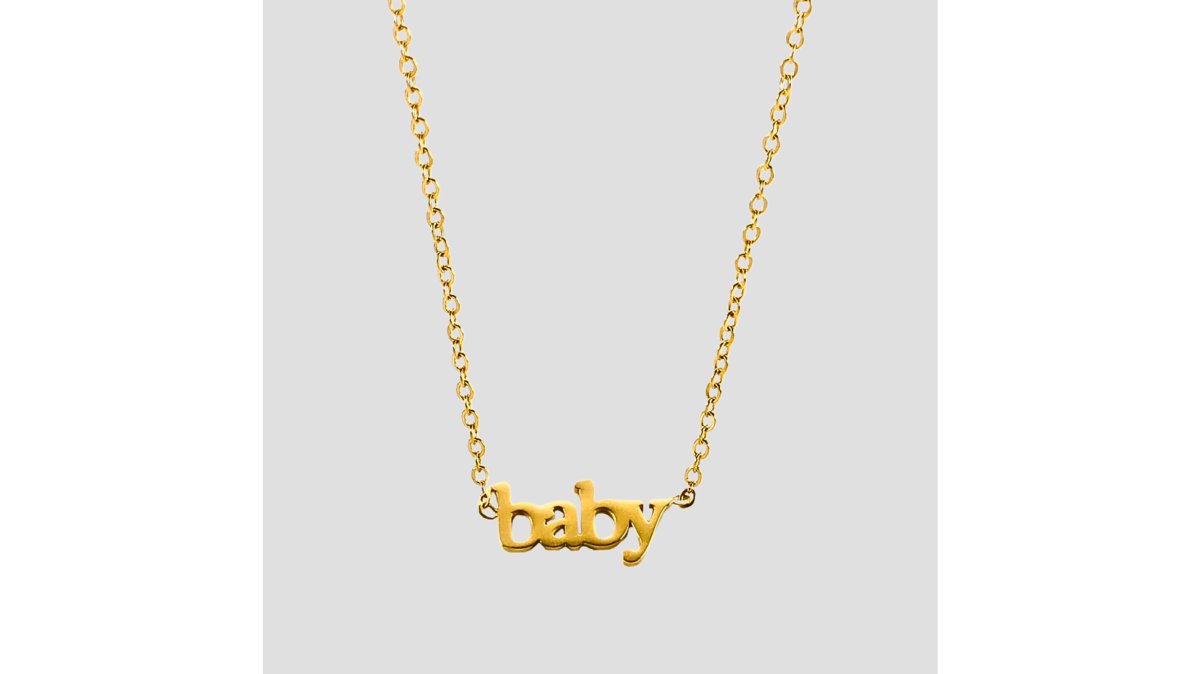
The Baby 18k Gold Nameplate Dainty Necklace works beautifully as a shortest layer. Its 45cm length with extender gives you flexibility.
Putting On and Removing Your Layered Stack
How you put on and remove necklaces affects tangling risk.
Putting on your stack:
Start with the longest necklace, then the middle, then the shortest. This order prevents shorter chains from tangling in longer ones during fastening.
baby 18k Gold Nameplate Dainty Necklace →
Never toss all three chains on at once, take thirty seconds to do it properly.
Removing your stack:
Reverse the order: shortest first, then middle, then longest, so shorter chains don't catch on longer ones.
Never yank chains off; if you feel resistance, stop and work it out before continuing.
Storage matters:
Store each chain separately or use a necklace organizer, coiling them together overnight creates tangles that carry into the next day.
Gold-Specific Care and Material Compatibility
Layering gold necklaces puts chains in constant contact, and how they wear depends on the kind of gold.
Solid Gold
Solid gold (14k, 18k, 24k) is gold alloyed for strength. The gold runs through the entire chain, so scratches don't expose a different metal and it polishes back to a shine without flaking.
The trade-off is cost and weight. Solid gold is heavier, which helps layering, heavier chains tangle less, but two solid gold chains of similar hardness can still scratch each other at contact points.
Gold-Filled
Gold-filled jewelry bonds a thick layer of gold to a base metal with heat and pressure. The layer is far thicker than plating.
Gold-filled chains layer well with solid gold and each other.
Gold-Plated
Gold plating is a thin layer of gold electroplated onto base metal, measured in microns, and it wears away with friction, exactly what layered necklaces create. Plated chains wear fastest where they rub other chains.
If you layer plated chains, keep these points in mind:
- Don't layer two plated chains of the same thickness at the same length. The friction between them accelerates wear on both.
- Put plated chains at the outer layers of your stack, where they contact fewer chains.
- Rotate your stack. Wearing the same plated chains every day concentrates wear on the same contact points.
- Keep plated chains away from abrasive textures like rope or curb chains, which act like files against a thin coating.
PVD (physical vapor deposition) coating is harder and more durable than electroplating, resisting scratches and tarnish, which makes PVD-coated chains reasonable for layering. But no coating is permanent, even PVD wears at high-friction points.
Mixing Materials Safely
When you layer different gold types, the harder material wins: solid gold wears down plated chains it rubs against, and gold-filled outlasts plated. Put your most durable chains where they contact the most chains, and delicate finishes on the outside.
Skin Sensitivity
If you have sensitive skin:
- A PVD coating creates a barrier between your skin and the base metal, which reduces irritation risk.
- If a chain starts to irritate skin it didn't irritate before, the plating may have worn through at a contact point. That's a sign to retire or re-plate the piece.
Care for Layered Gold
- Wipe chains after wear. Skin oils and lotions build up in links and attract grit, increasing friction between layered chains.
- Store separately. Coiling layered chains together overnight transfers the day's friction into a tangle. Use individual pouches or a hanging organizer.
- Avoid chlorine and salt water for plated and gold-filled pieces. They accelerate tarnish and wear on the base metal.
- Skip powders and lotions on the chains themselves. They build up in links and trap grit. Apply lotion or powder to your skin first, let it dry, then put on your necklaces.
- Check clasps and jump rings monthly. These are the highest-friction points in any layered stack. A loose or worn clasp lets chains shift and tangle.
Troubleshooting Tangled Necklaces by Cause
Even with careful layering, tangles happen. Knowing the cause helps you prevent the next one.
Cause: Chains touching at the same length
If your necklaces tangled overnight, they're sitting too close together.
Cause: Identical chain styles
Two identical chains tangle more readily than different ones. Replace one with a different texture or weight, the contrast looks better too.
Cause: Chains too delicate
Very fine chains tangle easily. Pair an extremely delicate shortest layer with heavier middle and longest layers, the weight difference prevents tangling.
Cause: Clasp placement issues
If you're using a layering clasp and still getting tangles, check that all chains are attached securely.
Cause: Movement during sleep
Sleeping in your necklaces causes tangling.
Cause: Friction from clothing
Tight necklines make chains bunch and tangle.
Layering gold necklaces transforms your look instantly, but only if they stay untangled. GRISÉ NYC's collection of 18k gold-plated pieces, including options like the Octo Gemstone Pendant Necklace, gives you the quality and variety to build a stunning stack that stays organized all day.

Frequently Asked Questions
How do you keep three layered necklaces from tangling?
The key is spacing: maintain about two inches between each necklace layer at the widest point of your neck. Use chains with different thicknesses, pair a delicate 2mm chain with a heavier 4mm chain to reduce friction. Arrange necklaces by length so the shortest sits highest and the longest sits lowest. Consider a layering clasp or jump ring connector to anchor each chain to a single point, preventing them from moving independently and tangling together during wear.
What is the best spacing for layered gold necklaces?
Aim for approximately two inches of breathing room between each layer at the widest point of your neck. This spacing prevents chains from rubbing against each other and reduces knots. If you're wearing delicate necklaces, you may need slightly more space. Less spacing works if your chains are thicker or have different textures that naturally resist friction. Adjust based on your neckline and the specific chain weights you're wearing.
Do necklace layering clasps really help prevent tangling?
Yes. A necklace layering clasp or connector anchors multiple chains to a single point at the back of your neck, keeping them from sliding independently. This dramatically reduces movement and friction between layers. Jump rings serve a similar purpose. If you're layering more than two necklaces, a clasp system is highly recommended. For two delicate chains with proper spacing, you may skip a clasp, but it's a worthwhile investment for frequent layerers.
Can I layer necklaces with different chain types without them tangling?
Absolutely. Mixing chain styles, such as pairing a round snake chain with a delicate box chain, actually reduces tangling because different textures create less friction. Vary chain weights too: combine a thin 2mm chain with a thicker 4mm option. The key is ensuring each chain has distinct movement patterns so they don't lock together. Always maintain proper spacing and consider using a layering clasp for added security, especially if you're active or exercising.

