


Table of Contents
- Why Gold Plated Jewelry Turns Green: The Real Cause
- Does Gold Plated Jewelry Turn Skin Green? Yes, Here's Why
- How to Prevent Gold Plated Jewelry From Tarnishing
- How to Clean Gold Plated Stainless Steel Without Damage
- Is Green Discoloration Harmful? What Dermatologists Say
- Solid Gold vs. Gold Plated: Longevity and Material Choices
- Frequently Asked Questions
Last Updated: September 28, 2026
Why Gold Plated Jewelry Turns Green: The Real Cause
If your favorite gold ring left a green mark on your finger, you're not alone. This is one of the most common questions people ask about gold plated jewelry, and the answer comes down to basic chemistry, not bad luck.
Here's the short version: gold itself doesn't turn green. The green comes from the base metal underneath the plating. When that metal meets your sweat, it reacts and forms new compounds. Those compounds leave color on your skin.
At GRISÉ NYC, we build our pieces on stainless steel for exactly this reason. But it helps to understand what's actually happening first.
The Chemical Reaction Behind Green Skin
The green color comes from oxidation. It's the same process that turns a copper roof green over time.
Most plated jewelry uses copper or brass as its base. These metals contain copper. When copper touches moisture and air, it forms copper salts. Those salts are green.
Your skin is the trigger. Sweat and natural oils pull tiny amounts of copper to the surface. The metal then reacts with acids on your skin. The result is that telltale green stain.
Plating Thickness and Surface Wear
Thicker plating means a longer life. Thin plating wears through fast.
Plating thickness is measured in microns. A thin layer, common on cheap pieces, can wear down in weeks. Once the gold layer rubs away, the base metal sits exposed.
Friction speeds this up. Rings and bracelets take the most abuse. They rub against your skin all day long.
Does Gold Plated Jewelry Turn Skin Green? Yes, Here's Why
Yes, gold plated jewelry can turn skin green, and the cause is the base metal, not the gold. The gold layer is non-reactive and safe. The trouble starts when the base metal beneath it gets exposed to moisture and acids.
This is why two people can wear the same piece and get different results. One person's skin stays clean. The other gets a green ring. The difference is skin acidity.
How Skin Acidity and pH Balance Affect Discoloration
Your skin has a natural pH balance, usually slightly acidic. This acid is part of your skin barrier, the outer layer that protects you.
Some people have more acidic skin than others. That extra acid speeds up the reaction with base metals. The more acid, the faster the green shows up.
Diet, stress, and even the season can shift your skin's pH. So a piece that was fine in winter might stain in summer. It's not the jewelry changing. It's your skin chemistry.
Environmental Triggers Beyond Sweat
Sweat isn't the only culprit. Plenty of everyday things speed up discoloration.
- Perfume and lotion: Alcohol and oils break down thin plating.
- Chlorine and salt water: Pools and oceans are harsh on base metals.
- Humidity: Moist air keeps the reaction going.
- Cleaning products: Harsh chemicals strip the gold layer.
- Sunscreen: The minerals in it react with copper.
A common mistake is spraying perfume right onto your jewelry. That single habit can cut a piece's life in half. Apply fragrance first, let it dry, then put your jewelry on.
How to Prevent Gold Plated Jewelry From Tarnishing
Prevention comes down to two things: a protective barrier and smart daily habits. If you want to know how to prevent gold plated jewelry from tarnishing, start by keeping the base metal sealed off from moisture and air.
The second is how you wear and store your pieces.
DIY Protective Coatings That Actually Work
You can add a clear barrier at home. These methods work, but you have to reapply them over time.
- Clear nail polish: Paint a thin layer on the inside of rings and clasps. Let it dry fully.
- Jewelry sealant: A clear spray made for metal. Follow the label and apply in thin coats.
- Renaissance wax: A microcrystalline wax used by museums. It seals metal without changing its look.
- Clear lacquer: A brush-on coating that dries hard and clear.
Everyday Habits That Extend Plating Life
Small habits make a big difference. Here's what actually protects your pieces:
- Put jewelry on last, after lotion and perfume dry.
- Take it off before the gym, shower, or pool.
- Wipe each piece with a soft cloth after wearing.
- Store pieces in a dry pouch or box, not loose in a drawer.
- Keep pieces apart so they don't scratch each other.
How to Clean Gold Plated Stainless Steel Without Damage
Learning how to clean gold plated stainless steel is simple if you stay gentle. Harsh scrubbing or strong cleaners strip the gold layer. The goal is to lift dirt without touching the plating.
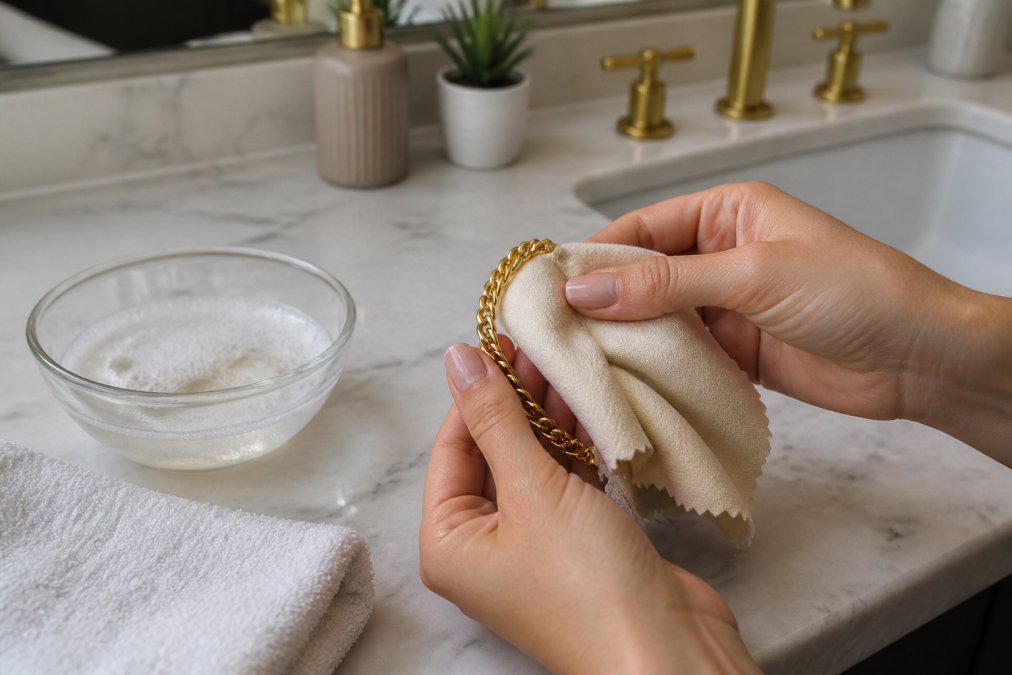
Follow these steps:
- Mix a few drops of mild soap into warm water.
- Dip a soft cloth into the water and wring it out.
- Wipe each piece gently. Don't scrub.
- Rinse with a clean, damp cloth.
- Dry fully with a soft towel.
Is Green Discoloration Harmful? What Dermatologists Say
For most people, the green stain is harmless. It's a surface reaction, not a poison. The color sits on your skin and washes off with soap and water.
Solid Gold vs. Gold Plated: Longevity and Material Choices
Solid gold and gold plated jewelry differ in one key way: what's inside. Solid gold is gold all the way through. Gold plated jewelry has a thin gold layer over a base metal.
Base Metal Reaction Rates: A Practical Comparison
Not all base metals behave the same way against skin.
Base Metal |
Typical Reaction Speed |
Green Stain Risk |
Notes |
|---|---|---|---|
Copper |
Fast, often within hours |
High |
Highest copper content; reacts fastest with sweat and acids |
Brass |
Fast, within a day |
High |
Copper-zinc alloy; still copper-dominant |
Nickel silver |
Moderate |
Medium |
Contains no silver; copper-nickel-zinc blend |
Stainless steel (304) |
Slow |
Low |
Chromium oxide layer resists reaction; common in everyday-wear pieces |
Stainless steel (316L) |
Very slow |
Very low |
Marine-grade; more molybdenum, better corrosion resistance |
Titanium |
Negligible |
None |
Not typically plated; used for sensitive-skin pieces |
How Long Plating Actually Lasts
Plating longevity depends on thickness, base metal, and wear pattern.
Solid Gold, Vermeil, Plated, and Plated Stainless: Side by Side
Material |
What It Is |
Green Risk |
Typical Lifespan |
Best For |
|---|---|---|---|---|
Solid gold (10K-24K) |
Gold all through |
None |
Decades to lifetime |
Heirloom pieces |
Gold vermeil |
2.5+ microns gold over sterling silver |
Low |
2-5+ years |
Sensitive skin, daily wear |
Gold plated (brass/copper base) |
Thin gold over copper alloy |
Medium to high |
Months to 2 years |
Occasional wear, budget styles |
Gold plated stainless steel |
Gold over 304 or 316L steel |
Low |
1-3+ years |
Everyday wear, active routines |
For daily wear, gold plated stainless steel hits a sweet spot. Stainless steel resists corrosion and tarnishing. It's also a strong, low-reactivity base. That's the choice we make at GRISÉ NYC, and it's why our pieces hold up to gym sessions, showers, and real life.
Frequently Asked Questions
How do I clean gold-plated jewelry that turned green?
Mix a few drops of mild dish soap with warm water. Dip a soft cloth into the solution and gently wipe the green residue from the jewelry. For stubborn spots, use a jewelry polishing cloth. Avoid abrasive cleaners, toothpaste, or harsh chemicals that can strip the plating. Rinse with a clean damp cloth and dry thoroughly before storing. This method works well for gold plated stainless steel pieces, which resist corrosion better than brass or copper base metals.
Does gold-plated stainless steel turn your skin green?
It can, but less often than jewelry made with copper or brass bases. Stainless steel is non-reactive for most people, but the thin gold layer can wear down over time. Once the base metal is exposed to sweat and skin acidity, a chemical reaction may produce green discoloration. Choosing pieces with thicker plating and keeping them dry during workouts or showers reduces the risk significantly.
How long will gold-plated jewelry last before it turns green?
Longevity depends on plating thickness, base metal, and how you care for the piece. Jewelry with thick 18k gold plating over stainless steel can stay bright for years with proper maintenance. Thinner plating over copper or brass may show wear within months. Factors like frequent moisture exposure, perspiration, and surface wear speed up tarnishing. Regular cleaning and storage in a dry pouch extend the life of any gold plated jewelry.
Is the green discoloration from gold-plated jewelry harmful to my skin?
The green color itself is not toxic. It comes from copper salts formed when the base metal reacts with sweat and skin acidity. For most people, it washes off with soap and water. However, if you have a nickel allergy or metal sensitivity, the exposed base metal could trigger a dermatological reaction like redness or itching. If irritation occurs, remove the jewelry and consult a dermatologist. Hypoallergenic options like stainless steel reduce this risk.
Green stains come from the base metal, not the gold, and they're a sign your plating has worn thin. The fix is smarter materials and better care. GRISÉ NYC crafts 18k gold-plated jewelry over durable stainless steel, built for daily wear and made to keep its shine. Our pieces are designed for stacking, styled for bold looks, and loved by influencers. Add to cart and build a stack that lasts.

