


Last Updated: November 12, 2026
Quick Summary
Gold plated necklaces with gemstone pendants are worth buying for everyday wear, layering and a modest budget, because they look like gold at a much lower price than solid gold. Durability depends on the plating thickness, the base metal, and how the piece is worn and cared for.
- Plating is a thin gold layer on a base metal, while vermeil uses at least 2.5 microns of gold over sterling silver.
- Stainless steel with 18k gold plating is a sturdy base that resists tarnish better than copper.
- Cubic zirconia gives gemstone color and brilliance at a lower price than natural stones.
- Take the necklace off before sweating, swimming or using hot tubs to extend the finish.
- Clean with a damp cloth and mild soap, and avoid ultrasonic cleaners, which can loosen settings.
Table of Contents
- What Gold-Plated Gemstone Necklaces Are Made Of
- Gold Plating Versus Gold Vermeil and Solid Gold
- How Long Does Gold Plating Last on a Necklace?
- Can Gold-Plated Jewelry Get Wet, and What About Gym Sessions?
- How to Clean a Gold-Plated Gemstone Pendant Without Damaging the Finish
- How to Store Gold-Plated Jewelry So It Keeps Its Shine
- Choosing Your Next Gold-Plated Gemstone Necklace
- Frequently Asked Questions
Gold plated necklaces with gemstone pendants look like a smart buy until the finish starts wearing thin. The difference between plating, vermeil and solid gold largely decides how long a necklace keeps its shine. Fashion-conscious shoppers who layer chains daily need to know that difference before they pay for one.
Gemstone necklaces are a visible 2026 trend. Harper's Bazaar points to east-west gemstone settings among its seven necklace trends for the year (Harper's Bazaar 2026 necklace trends), and Gabriel & Co. highlights bold gold pieces alongside modern minimalist designs (Gabriel & Co. 2026 jewelry trends overview). Trend coverage does not tell you how the piece is built, though, so the sections below cover the materials, the finishes, and the care that determine whether a gold-plated gemstone necklace is worth buying.
What Gold-Plated Gemstone Necklaces Are Made Of
Gold plating is a thin layer of gold bonded to a base metal. Our stainless steel jewelry tarnish guide explains why the steel base stays bright and what causes dullness. On the pieces described here, that base is stainless steel, and the finish is 18k gold. The steel gives the chain its strength, and the gold gives it its color. Both parts matter. A thick, sturdy base resists bending, and a well-applied finish resists wear.
Local Eclectic explains that plating uses far less gold than a solid piece, which is why it looks like gold at a much lower price (Local Eclectic guide to gold plating). That cost difference is the core trade-off. You are paying for appearance and everyday durability, not for the metal's value as a store of wealth.
18k gold plating over stainless steel
The 18k plating sits on top and does the visible work.
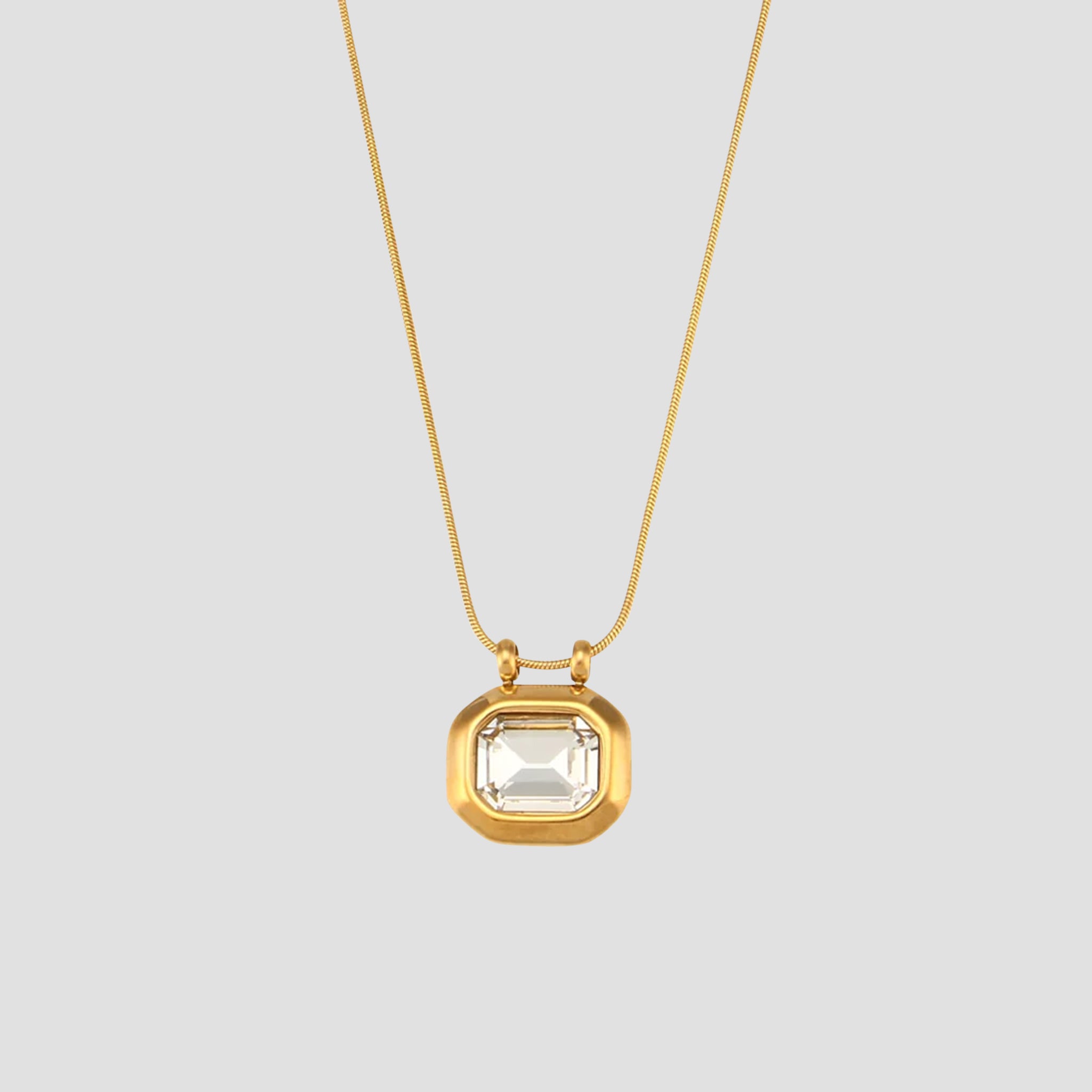
The Octo Gemstone Pendant Necklace is a good example. It is built from 18k gold plated stainless steel, is described as waterproof and tarnish-resistant, and comes with an 18" chain plus a 2" extender. For a minimalist pendant that sees daily wear, that construction is the right starting point.
Cubic zirconia versus natural gemstones
The gemstone is the second material to check. Cubic zirconia is a lab-made stone that is widely used in fashion jewelry.
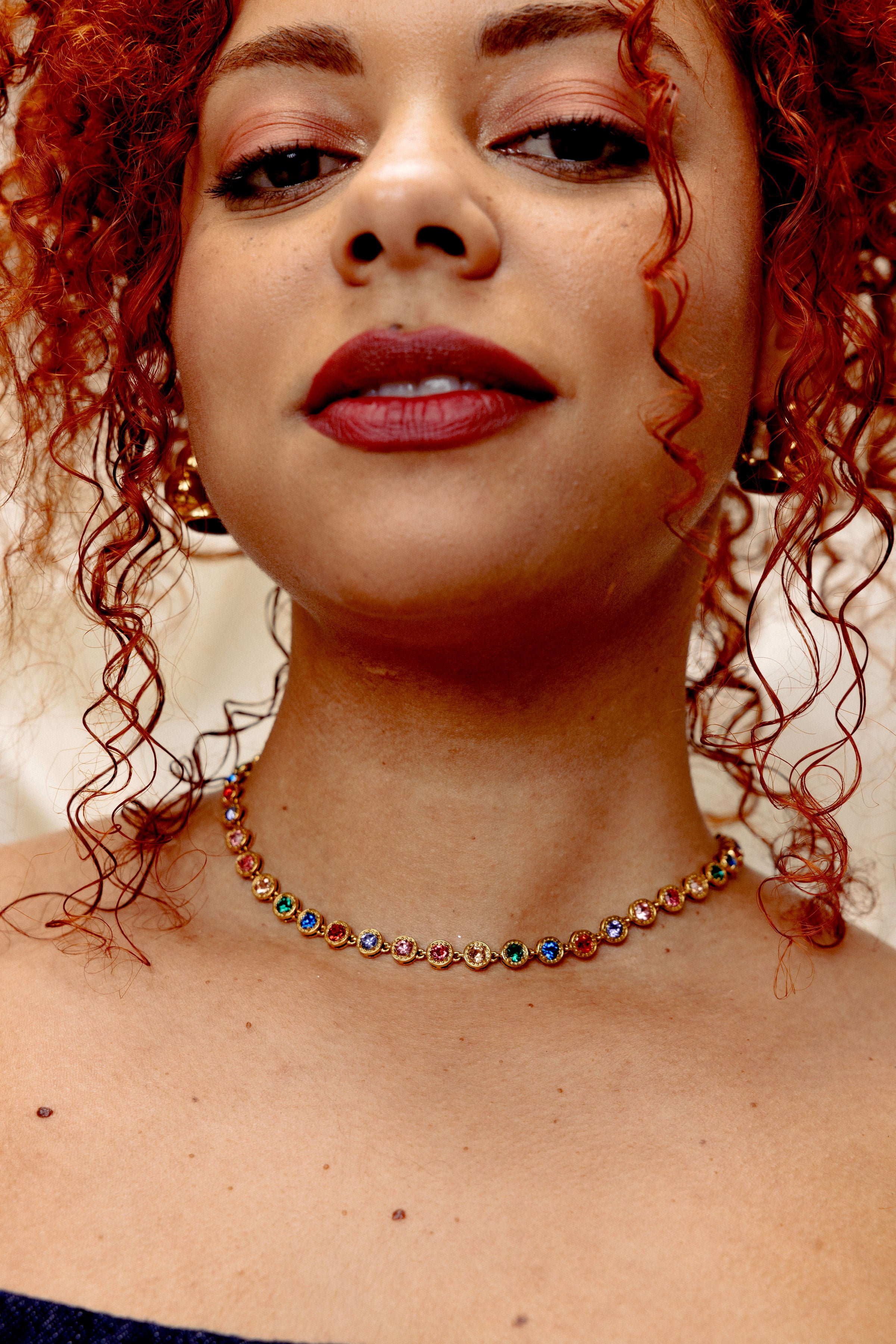
The Royal 18k Gold Plated Multicolor Gemstone Necklace uses cubic zirconia in a rainbow of colors on an 18k gold plated stainless steel base. Its 14.5" chain with a 3.5" extender sits high on the neck.
Gold Plating Versus Gold Vermeil and Solid Gold
Three finishes are commonly sold, and they behave very differently over time. The terms get used loosely in listings, so the practical skill is knowing what each one actually means and how to verify it before you pay.
- Gold plating: A thin layer of gold bonded to a base metal, often brass, copper, or stainless steel. The gold layer is typically measured in microns and is usually the thinnest of the three finishes. It is the most affordable option.
- Gold vermeil: A thicker gold layer, generally at least 2.5 microns, over sterling silver (not a base metal like brass or steel). Because the core is sterling silver and the gold layer is thicker, vermeil costs more than plating and generally lasts longer under wear.
- Solid gold: Gold throughout the piece, usually alloyed with other metals for strength and color. It is the most expensive and the most resistant to wear and tarnish, and it can be polished or repaired rather than replaced.
A simple way to tell them apart is to check the hallmark and the listing.
Watch out: "gold filled" is a fourth term that sometimes appears and is not the same as plated or vermeil.
Plating is the right choice when you want a bold, layered look without the price of solid gold.
The three finishes differ in layer thickness, base metal, cost and durability, as summarised below.
| Finish | Base and layer | Relative cost and durability |
|---|---|---|
| Gold plating | Thin gold layer on brass, copper or stainless steel | Most affordable; thinnest layer |
| Gold vermeil | At least 2.5 microns of gold over sterling silver | Costs more; generally lasts longer |
| Solid gold | Gold throughout, alloyed for strength | Most expensive; most wear-resistant |
How Long Does Gold Plating Last on a Necklace?
Plating lasts as long as the gold layer stays intact. With daily wear, the finish can thin at the points that rub the most. Friction, sweat, and skin contact all speed this up.
Plating durability depends on several factors:
- Plating thickness: Thicker plating lasts longer.
- Base metal: Stainless steel holds its shape and does not tarnish the way copper does, which helps the finish stay even.
- Wear habits: Removing the necklace for sleep, workouts and swimming extends its life.
- Skin chemistry: Sweat, lotion, and perfume can break down plating faster.
A common mistake is assuming all gold plating wears the same way. Two necklaces with the same look can age very differently depending on the base and the finish thickness.
GRISÉ NYC stainless steel jewelry is designed to resist tarnish, but no plated piece lasts forever. Treat the finish as something to maintain, not something that never changes. Our stainless steel jewelry lifespan guide covers realistic wear timelines and care steps for the steel base under the plating.
Can Gold-Plated Jewelry Get Wet, and What About Gym Sessions?
Many gold-plated necklaces can handle light moisture, but water and sweat still affect the finish over time. Waterproof does not mean indestructible. Chlorine, salt water, and harsh soaps can dull the surface even on a steel base.
The Octo Gemstone Pendant Necklace is described as waterproof and tarnish-resistant, which makes it a practical everyday piece. If you prefer a sturdier style, you can see the rugged steel cross gemstone pendant and compare it side by side.
Gym sessions are a good test case for the question "will this survive my life?" The answer depends less on the metal than on your habits. A necklace that comes off before lifting and goes back on afterward will outlast one that stays on through every session.
How to Clean a Gold-Plated Gemstone Pendant Without Damaging the Finish
Clean plated jewelry gently. Harsh abrasives, strong chemicals, and scrubbing with rough cloths can remove the gold layer, and the gemstone setting needs its own care because moisture trapped around a stone can loosen it over time.
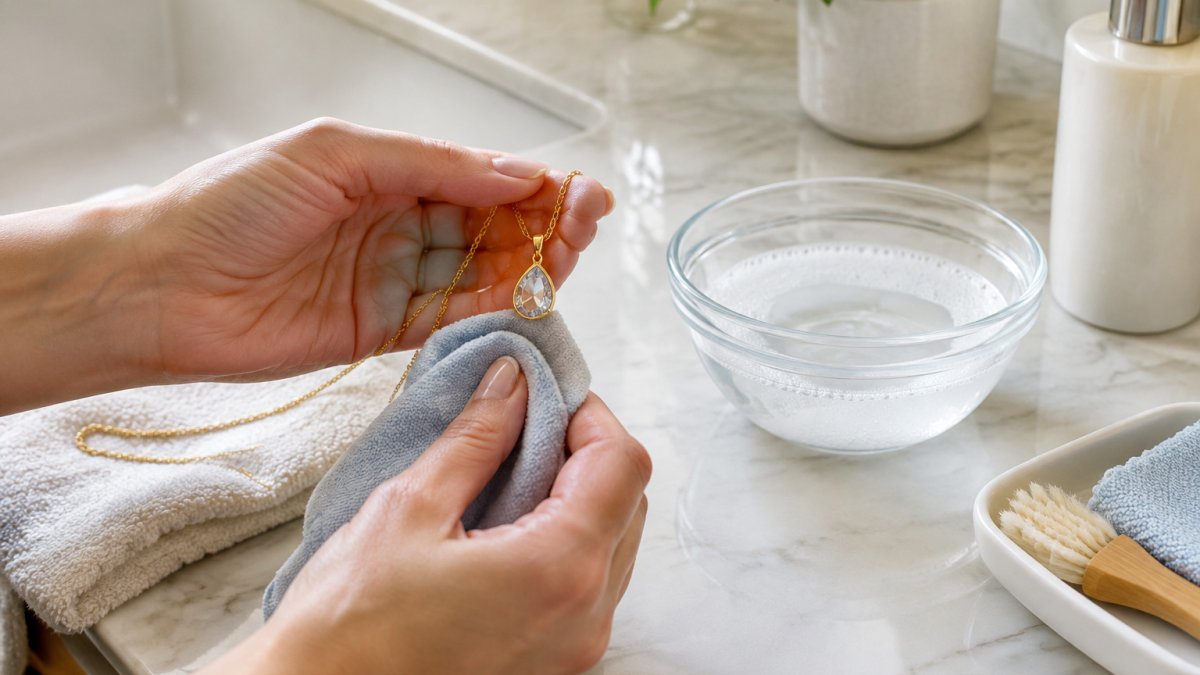
- Mix a few drops of mild dish soap into a small bowl of lukewarm water. Avoid hot water, which can soften adhesives used in some settings.
- Dip a soft cloth in the solution and wring it out until it is only damp. A dripping cloth pushes water into the setting.
- Gently wipe the chain and pendant, paying attention to the setting around the gemstone. Work along the chain rather than scrubbing across it, so you do not catch the links on the cloth.
- Rinse the piece under lukewarm water, keeping the stone itself covered where possible. For porous or treated stones, skip the rinse and wipe with a damp cloth only.
- Pat it dry with a soft, lint-free cloth and let it air-dry fully before storing. Storing a damp piece is a common cause of dulling.
Avoid toothpaste, baking soda, and jewelry cleaners with strong acids. These can scratch the plating or cloud the gemstone.
Watch out: ultrasonic cleaners can loosen gemstone settings and damage plating, so skip them for any gemstone pendant. The same applies to steam cleaners, which can force moisture behind a stone.
Gemstone type changes the routine. Natural stones vary: porous varieties such as opal, pearl, and turquoise should not be soaked, and treated stones may be sensitive to heat or chemicals.
How to Store Gold-Plated Jewelry So It Keeps Its Shine
Storage matters as much as cleaning. Moisture and air exposure are the main reasons plated jewelry dulls faster than it should.
Keep each necklace in a separate soft pouch or lined compartment so the chains do not scratch each other or the pendant. Store pieces in a dry drawer or box away from direct sunlight, and keep them away from perfume, hairspray and cosmetics. Those products can react with the finish.
Layering creates a specific risk. When multiple chains sit together, they rub, and the friction shows up as wear on the high points. Lay them flat or hang them so they do not twist into one another. A small jewelry tray with dividers does the job well.
Choosing Your Next Gold-Plated Gemstone Necklace
Start with the look you want, then check the construction. A bold multicolor piece and a quiet minimalist pendant have different roles in a stack, and the right choice depends on how you wear jewelry.
Work through these steps before you buy:
- Decide the role. Is this a standalone statement piece or a layering chain?
- Check the base metal and finish. Look for stainless steel with 18k gold plating, and confirm the plating is named in the listing.
- Choose the stone type. Cubic zirconia offers color and brilliance at a lower price. Confirm the stone is named in the listing.
- Pick the chain length. A 14" chain sits close at the neck, while an 18" chain falls lower and layers easily.
- Plan the stack. Imagine the piece next to your current chains before you order.
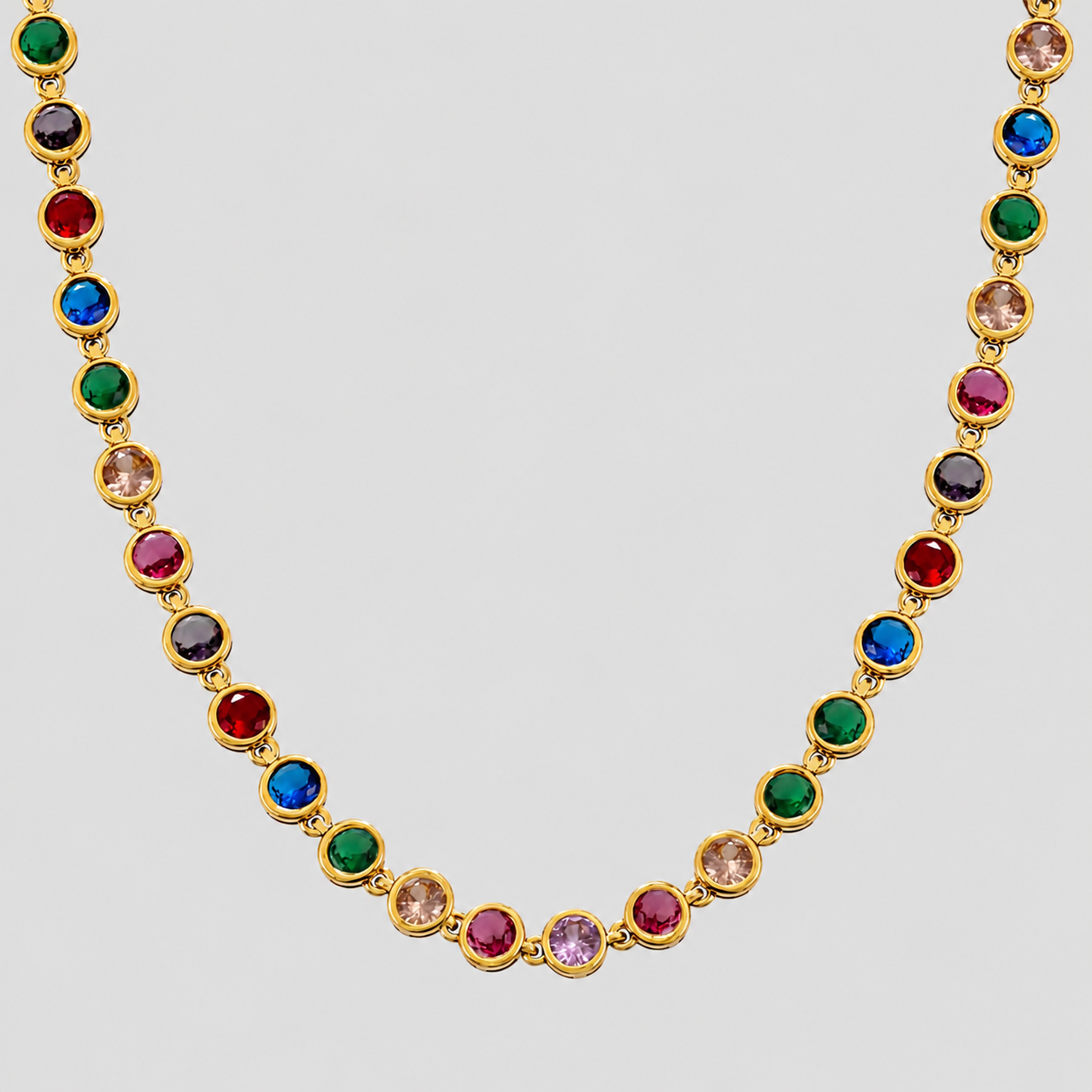
The Octo Gemstone Pendant Necklace is priced at $78.00 and has a clear faceted stone in an octagonal setting. For a bolder, color-forward look, the Royal 18k Gold Plated Multicolor Gemstone Necklace is priced at $98.00. If you want the bezel-set look, the Royal Bezel Gemstone Necklace - 18k Gold Plated is priced at $84.00, and the Royal Multicolor Bezel Gemstone Necklace - 18k Gold Plated is priced at $94.00.
So, are gold-plated gemstone necklaces worth it? For everyday wear, layering, and a budget that does not stretch to solid gold, yes. Choose a piece with a named base metal and finish, look after the plating, and store it properly, and it will keep looking good for a long time.
Start your stack with GRISÉ NYC and find a gold-plated gemstone necklace built for daily wear.
Frequently Asked Questions
How do you care for a gold-plated necklace with a gemstone pendant?
Remove the necklace before showering, swimming or exercising, and put it on after applying lotion, perfume or hair products. Wipe it with a soft, dry cloth after wearing, and clean it occasionally with lukewarm water and a drop of mild soap, then dry it fully. Avoid harsh chemicals, abrasive cleaners and ultrasonic machines, which can wear away plating and loosen stones. Store it separately so the chain does not scratch the pendant.
How long does gold plating last on a necklace?
Gold plating lasts as long as the thin gold layer stays intact, and that depends on plating thickness, base metal, daily wear and care. Stainless steel with 18k gold plating is tarnish-resistant. Friction at the clasp and chain, sweat and chemicals gradually thin the finish. Rotating pieces and removing jewelry during exercise can extend how long the shine lasts.
Can gold-plated gemstone necklaces get wet?
Waterproof gold-plated stainless steel pieces can handle brief water exposure, such as rain or washing hands, but repeated soaking and chlorinated pools still shorten the finish's life. Remove the necklace before swimming, hot tubs and long showers, and dry it promptly after sweating or getting caught in rain. Water alone does not usually harm stainless steel, but soap residue, chlorine and salt can dull the surface over time.
How can you tell if a gemstone pendant is natural?
Natural and lab-created stones differ in clarity, color consistency and inclusions, and many cubic zirconia pendants are sold as crystal or gemstone jewelry. Check the product listing for stone type, and look for consistent faceting and bezel settings. Natural stones often show small internal flaws under magnification, while cubic zirconia looks very uniform and bright. Price and sourcing details are the most reliable clues.


