


Solid gold costs more than gold-plated jewelry because its gold alloy runs throughout the metal, but there is no fixed multiplier that applies to every ring, chain, or pair of earrings. Your comparison also needs to account for construction, stones, craftsmanship, and care—not just the gold-colored finish.
- Solid gold vs gold plated cost depends on gold content, weight, construction, and design—not appearance alone.
- Choose solid gold for gold throughout the metal; choose gold-plated jewelry when the design matters more than precious-metal content.
- GRISÉ NYC offers gold-plated statement jewelry for shoppers who want bold designs rather than solid-gold construction.
- An 18k gold-plated label describes the coating’s purity, not the gold content of the whole piece.
How much more does solid gold cost than gold-plated?
There is no universal solid-gold premium. Compare similar pieces before deciding whether the difference makes sense: the same jewelry category, similar dimensions, comparable stones, and clearly stated construction.
A chunky plated ring and a delicate solid-gold ring are not material-for-material substitutes. You are choosing between different amounts of precious metal and different visual effects.
| What you compare | Solid gold | Gold-plated jewelry |
|---|---|---|
| Where the gold is | Gold alloy throughout the metal | A gold coating over another material |
| What karat describes | Purity of the gold alloy | Purity of the gold coating |
| Main material consideration | Gold purity and metal weight | Base material, coating, and other components |
| Best for | Prioritizing gold throughout the piece | Prioritizing a gold finish and statement design |
| Main advantage | Surface wear does not expose a different base metal | Gold appearance without solid-gold construction |
| Main limitation | More precious metal to pay for | The gold coating can wear away |
If you are shopping for the look rather than precious-metal content, start with the shapes you wear. These gold-plated necklaces for everyday styling keep that decision focused on your wardrobe.
Why this matters
A gold finish can make two pieces look similar in a photo while their construction is completely different. Buying by color alone skips the detail that explains the material difference.
For your 2026 jewelry budget, separate two questions: do you want gold throughout the piece, or do you want a particular design in a gold finish? Neither answer needs an apology. They simply lead to different purchases.
Solid gold: best for gold throughout the metal
Solid gold jewelry contains a gold alloy throughout its metal structure. It does not need to be pure gold to qualify: 18k gold contains 75% gold, with other metals making up the balance.
That gives solid gold a clear advantage when a surface gets scratched. There is still gold alloy beneath it, rather than a contrasting base material waiting under a coating.
The trade-off is the amount of precious metal involved. A broad statement ring and a fine band can contain very different amounts, even when both carry the same karat description.
Also, solid gold does not automatically mean heavy or solidly filled. A hollow piece can use a solid-gold alloy while containing empty space inside its shape. Ask about construction instead of treating the word solid as a weight guarantee.
Choose solid gold when the metal itself is part of what you want to own. Do not assume the label makes a piece scratch-proof, maintenance-free, or guaranteed to hold its purchase value.
Gold-plated jewelry: best for choosing the statement first
Gold-plated jewelry places a gold coating over another material. That lets you choose a gold-colored finish without choosing gold alloy throughout the entire piece.
An 18k gold-plated description does not mean the whole item is 75% gold. It describes the purity of the gold used in the coating; the underlying material still matters.
The upside is freedom to focus on shape, color, and attitude. An oversized ring, mixed-metal chain, or sculptural hoop can be the point of the purchase rather than its precious-metal content.
The limitation is the finish. Friction and wear can affect a coating, and the exact care requirements depend on the piece, including its base material, stones, resin, pearls, or enamel.
Choose gold-plated jewelry when you love the design and accept that a coating is a coating. A gold-plated purchase in 2026 should come with clear material information, not an assumption that every gold-looking piece performs alike.
Why solid gold vs gold plated cost varies
The visible size of a piece tells only part of the story. These factors explain why a simple material label cannot settle your comparison:
- Gold purity. Different karats contain different proportions of gold. An 18k solid-gold piece and an 18k gold-plated piece use that purity description differently.
- Metal weight. More gold alloy means more precious metal in a solid-gold piece. Width alone does not establish weight.
- Construction. Hollow and filled-out shapes can look similar while using different amounts of metal. Check the actual construction.
- Other materials. Cubic zirconia, natural stones, simulated pearls, freshwater pearls, enamel, and resin are distinct components. Do not treat them as interchangeable.
- Design and workmanship. A plain band and a detailed sculptural setting involve different designs. Material content is not the only thing you are buying.
- Finish and care. Gold plating introduces a surface layer to maintain. Ask about that specific finish rather than assuming a universal lifespan.
Compare the whole object. A dramatic silhouette does not prove high gold content, and a restrained design does not prove a small material difference.
Make an apples-to-apples comparison before you buy
A good comparison starts with the jewelry you actually want to wear. Use this sequence when narrowing your 2026 shortlist.
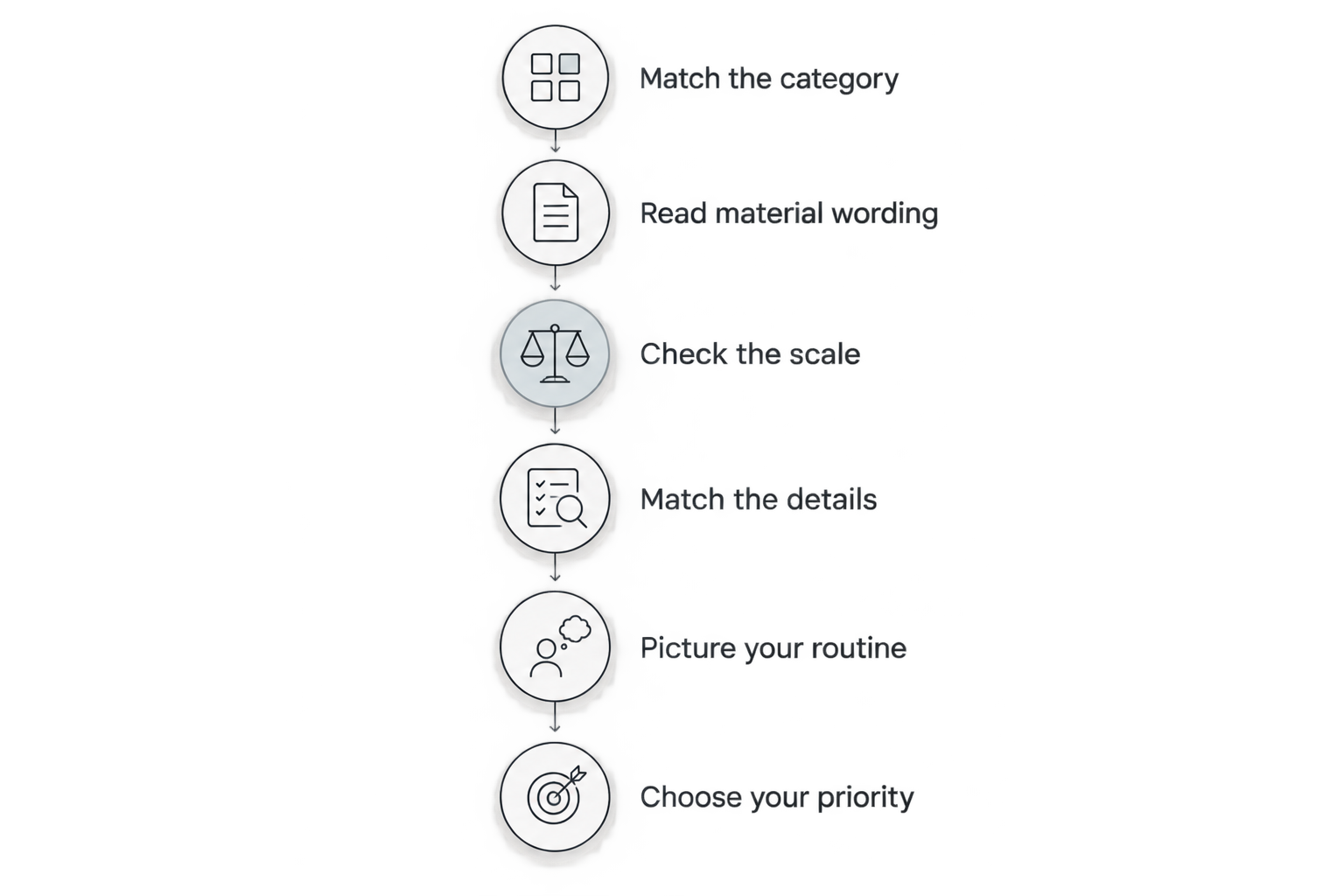
- Match the category. Compare a ring with a ring or a chain with a chain. A pendant necklace includes components that a plain chain does not.
- Read the material wording. Look for solid gold, gold-plated, and the stated base material. Gold-colored is not a complete material description.
- Check the scale. Compare dimensions and listed metal weight where provided. Product photos alone cannot establish either.
- Match the details. Separate the effect of stones, enamel, pearls, and sculptural settings from the metal choice.
- Picture your routine. Consider handwashing, exercise, desk work, and contact with other jewelry. Then read the individual care instructions.
- Choose your priority. Decide whether gold throughout the piece or the particular design matters more to you.
Bring the comparison back to your closet. If a ring only works with an outfit you never wear, its material description will not make it an everyday favorite.
Put the choice into an actual outfit
GRISÉ NYC gold-plated jewelry is best for shoppers choosing bold everyday designs over solid-gold construction. The useful question is not whether plated jewelry can imitate a different purchase; it is whether you want to wear the piece on its own terms.
These designs show two different reasons to choose a gold-plated finish. Neither should be confused with solid gold.
| Design | Best for | What makes it distinctive | What to consider |
|---|---|---|---|
| Perlita Double Pill Gold Ring | A sculptural hand statement | Twin organic, pearl-like stones, polished 18k gold plating, and an open brass band | It is plated brass, not solid gold; check sizing and care details |
| 2-Tone Rope Necklace | Bringing gold and silver tones together | A 3mm rope design alternating stainless steel and 18k gold-plated twists | It deliberately shows both tones; skip it if you want an entirely gold-colored chain |
Style the Perlita Double Pill Gold Ring with a plain cuff or bare neighboring fingers so its paired shapes remain visible. Let the ring do the talking; your whole hand does not need a speech.
Use the two-tone rope necklace to connect a silver-colored watch with gold-colored earrings you already own. The mixed finish gives both colors a place without requiring every accessory to match.


Karat is not the whole comparison
Karat tells you the proportion of gold in a gold alloy. It does not tell you a finished piece’s weight, whether it is hollow, or whether the description refers only to a coating.
For context, 14k gold contains approximately 58.3% gold, 18k contains 75%, and 21k contains 87.5%. Those percentages describe alloy composition, not a finished-jewelry price formula.
The same distinction matters when comparing 21k gold jewelry pricing: higher purity changes the proportion of gold, but you still need weight and construction to compare finished pieces. A karat number cannot do all that work alone.
When reading a listing in 2026, keep the full phrase together. Removing plated from 18k gold-plated changes the meaning, even though the karat number stays the same.
Does gold-plated jewelry need more care than solid gold?
Gold-plated jewelry has a coating to protect, while solid gold has gold alloy throughout. Both still need care appropriate to their stones, settings, finishes, and construction.
Start with the individual product instructions. Do not borrow a water-resistance claim from one necklace and apply it to every ring, pearl detail, or enamel finish from the same shop.
For everyday handling, avoid rubbing pieces against one another in a crowded jewelry pile. Keep abrasive cleaning products away from plated finishes, and do not use polishing methods intended for solid gold without checking their suitability.
GRISÉ NYC sells jewelry with different materials and decorative details. Choose care by the piece, not by the brand name or the gold color. That is a better habit than looking for one cleaning shortcut for everything.
Is solid gold worth it for everyday wear?
Solid gold is worth considering when you want gold throughout the piece and expect the design to remain a regular part of your wardrobe. It is not automatically the better purchase for every outfit or wearing habit.
Think about the item you reach for without thinking. If that is a simple chain you rarely change, material content deserves close attention; if you love rotating bold shapes and colors, design variety deserves attention too.
Is 18k gold-plated jewelry the same as 18k solid gold?
18k gold contains 75% gold, but an 18k gold-plated item only uses that purity description for its coating. An 18k solid-gold item uses that alloy throughout its metal structure.
Look for the complete description and the base material. The words after the karat number are not fine print—they tell you what you are buying.
FAQ
How many times more does solid gold cost than gold-plated jewelry?
There is no fixed multiplier for solid gold versus gold-plated jewelry. Compare similar designs using gold purity, metal weight, construction, stones, and workmanship rather than applying one ratio to every piece.
Is 18k gold-plated jewelry mostly gold?
No, an 18k gold-plated label describes the gold coating’s purity, not the composition of the whole piece. The item has another material underneath that coating.
Can solid gold jewelry be hollow?
Yes, solid-gold jewelry can have hollow construction. Solid gold describes the metal alloy throughout the structure, not a guarantee that the interior is filled with metal.
Is gold-plated jewelry a bad choice for everyday outfits?
Gold-plated jewelry is a valid choice when you want its design and understand the finish. Choose according to the specific materials, your routine, and the product’s care instructions.
Will every gold-plated piece wear the same way?
No, gold-plated pieces do not all have identical materials, coatings, or wearing conditions. Avoid assuming that a durability or water-resistance claim for one item applies to another.
Does a higher karat number tell me which piece to buy?
No, a higher karat number describes a higher gold proportion in the alloy, not a complete buying verdict. You still need to compare construction, design, fit, and how you intend to wear the jewelry.
Should I choose solid gold or gold-plated jewelry as a gift to myself?
Choose solid gold when gold throughout the piece is your priority; choose gold-plated jewelry when the particular design matters more. Start with something that fits your actual wardrobe rather than an imaginary special occasion.
One last thing
Solid gold and hollow construction are not opposites. That distinction can explain why two similarly sized pieces deserve a closer look before you decide which contains more precious metal.
For your next 2026 purchase, save the full material description alongside the photo. The photo tells you whether you love the look; the description tells you whether you love what you are buying.


