


Last Updated: November 19, 2026
Quick Summary
Yes, stainless steel tarnish can happen, but it is rare because chromium forms a self-healing oxide layer that resists surface changes. Most dullness is actually residue from soap, lotion, or sweat, not metal damage. Rinse with fresh water and dry fully to keep pieces bright.
- Chromium makes up at least 10.5% of stainless steel and creates a self-healing oxide layer.
- Rinse jewelry with fresh water after pools or seawater, then dry with a soft cloth.
- Never use abrasive pads on polished steel, as they scratch the finish permanently.
- Skip ultrasonic cleaners and harsh chemicals on gold-plated or glued-stone pieces.
- 316L stainless steel offers very good tarnish resistance and suits sensitive skin.
Table of Contents
- Does Stainless Steel Tarnish? The Honest Answer
- Tarnish, Rust, Corrosion, and Residue: What's Actually on Your Jewelry
- Why Chromium and the Oxide Layer Do the Work
- Does Stainless Steel Tarnish in Water?
- How Long Does Stainless Steel Take to Tarnish?
- Does Stainless Steel Turn Skin Green?
- Stainless Steel vs. Sterling Silver: Which Holds Up Better?
- How to Clean Stainless Steel Jewelry Without Damaging It
- Shop Pieces Built to Resist Tarnish
- Frequently Asked Questions
Does Stainless Steel Tarnish? The Honest Answer
Does stainless steel tarnish? Yes, it can, but far less often than most people expect. Stainless steel jewelry resists tarnish thanks to chromium, yet it is not immune to every surface change.
Here is the short version. Stainless steel tarnish is rare, but it is real. The metal holds its shine through sweat, showers, and daily wear better than sterling silver or plated brass. Still, certain conditions can dull it or leave marks.
Below, we break down what actually causes changes on stainless steel, how to spot the difference between tarnish and residue, and how to keep your pieces looking new. We also cover water exposure, skin discoloration, and cleaning steps that will not damage the finish.
Tarnish, Rust, Corrosion, and Residue: What's Actually on Your Jewelry
Most people use "tarnish" as a catch-all term. That causes confusion, because four different things happen to metal.
Tarnish is a thin film that forms on the surface of metal when it reacts with air and moisture.
Rust is iron oxide. It only forms on metals that contain iron, and it eats into the metal over time.
Corrosion is a broader term for any chemical breakdown of metal. It can show as pitting, discoloration, or flaking.
Residue is not metal damage at all. It is soap, lotion, sunscreen, or dead skin sitting on the surface.
That last one matters most. What looks like stainless steel tarnish is often just product buildup.
Watch out: scrubbing a piece with an abrasive pad to "fix" a dull spot can scratch the polished finish permanently.
Why Chromium and the Oxide Layer Do the Work
Chromium is the reason stainless steel resists tarnish. The alloy contains at least 10.5% chromium, and that chromium reacts with oxygen to form a thin, invisible oxide layer on the surface.
This protective layer is self-healing. If it gets scratched, oxygen in the air rebuilds it within hours. That is why stainless steel handles everyday wear so well.
The Nickel Institute's overview of stainless steel properties explains how chromium content drives corrosion resistance across grades.
So the metal does not stay shiny because it is "coated." It stays shiny because the surface repairs itself. That is the core of stainless steel tarnish resistance, and it is why the material outlasts plated alternatives.
Does Stainless Steel Tarnish in Water?
Stainless steel does not tarnish from plain tap water. Brief contact is harmless because the chromium oxide layer stays intact and rebuilds itself as long as oxygen is available.
The mechanism is straightforward. Chloride ions, present in salt, sweat, and pool chemicals, compete with oxygen for a spot on the metal surface.
Here is how common exposures actually play out:
- Tap water and showers: No tarnish risk. Rinse and dry as normal. Soap residue, not the water, is usually what dulls the surface.
- Swimming pools and hot tubs: Chlorine is the main aggressor. Repeated exposure without rinsing can dull polished finishes and, over time, pit lower-grade steel. Rinse with fresh water immediately after swimming and dry fully.
- Seawater and saltwater: Chloride concentration is high, and salt crystals left on the surface keep the metal wet longer. Rinse with fresh water as soon as you leave the water, then dry with a soft cloth. Do not let saltwater dry on the piece.
- Sweat: Sweat is salty and slightly acidic. For most people, daily wear is fine, but heavy sweat left on a piece for hours, under a watch band or ring, creates a trapped-moisture pocket. Wipe the piece dry after workouts.
- Cosmetics and cleaning products: Lotions, sunscreens, hairspray, and household cleaners can leave a film that looks like tarnish. Some contain acids or abrasives that attack the finish. Apply cosmetics before putting on jewelry, and keep household cleaners off your pieces.
The practical rule is simple: fresh water rinse, then dry. Rinsing removes chlorides and residue before they can concentrate on the surface; drying removes the moisture that keeps the reaction going.
For a deeper look at why some metals leave marks on skin, see our guide on whether stainless steel turns your skin green.
How Long Does Stainless Steel Take to Tarnish?
There is no fixed timeline, and that is the honest answer. Stainless steel tarnish depends on the alloy, the finish, and what the piece touches.
A polished stainless steel necklace worn daily and cleaned weekly can stay bright for years. A piece left in a humid bathroom drawer or worn into a chlorinated pool may show dullness within months.
A common mistake is assuming "tarnish free" means "maintenance free." It does not. It means the metal resists tarnish far longer than plated or sterling options.
If you want the full distinction between tarnish-free and tarnish-proof marketing claims, read our breakdown of tarnish free jewelry versus tarnish-proof pieces.
Does Stainless Steel Turn Skin Green?
Stainless steel does not usually turn skin green. Green marks come from copper reacting with sweat and skin oils, and stainless steel contains little to no copper.
When a green mark does appear, the cause is almost always the plating, not the steel underneath. Cheap gold-plated or brass-core jewelry is the usual culprit.
If your skin reacts, check the material before blaming the metal. Our stainless steel pieces are made for everyday wear.
For the full science, read our article on why stainless steel does not turn your skin green.
Stainless Steel vs. Sterling Silver: Which Holds Up Better?
Stainless steel is generally more durable than sterling silver for everyday wear. Sterling silver tarnishes when exposed to air and moisture, so it typically needs regular polishing to stay bright.
Sterling silver has one edge: it is a precious metal, so it carries resale value and a softer, classic look. If you want heirloom value, silver makes sense. If you want a piece you can wear to the gym and forget about, stainless steel is the practical pick.
Stainless Steel Grades and What They Mean for Jewelry
316L stainless steel is a common jewelry grade. The "L" stands for low carbon.
304 stainless steel is also common.
| Grade | Chromium | Nickel | Best For | Tarnish Resistance |
|---|---|---|---|---|
| 304 | 18% | 8% | Budget pieces | Good |
| 316L | 16-18% | 10-14% | Daily-wear jewelry | Very good |
| 430 | 16-18% | Low | Magnetic clasps | Moderate |
If you have sensitive skin, 316L is the safer bet. Learn exactly what the grade means in our guide on what 316L means on jewelry.
Plated, Coated, and Colored Stainless Steel
Not all stainless steel jewelry is bare metal. Many pieces carry 18k gold plating over a steel core, which gives the look of gold at a fraction of the cost.
Plating adds a layer that can wear over time. The steel underneath resists tarnish, but the gold finish can fade with heavy friction.
Colored and coated stainless steel uses a PVD coating for black or rose tones. These hold up well but can chip if struck hard.
Watch out: never polish plated pieces with an abrasive cloth. You will rub the gold layer right off.
How to Clean Stainless Steel Jewelry Without Damaging It
Before you clean, diagnose. Most dullness on stainless steel is surface residue, soap, lotion, sunscreen, or skin oils, not tarnish. A quick test: wipe one small area with a soft cloth and warm water.
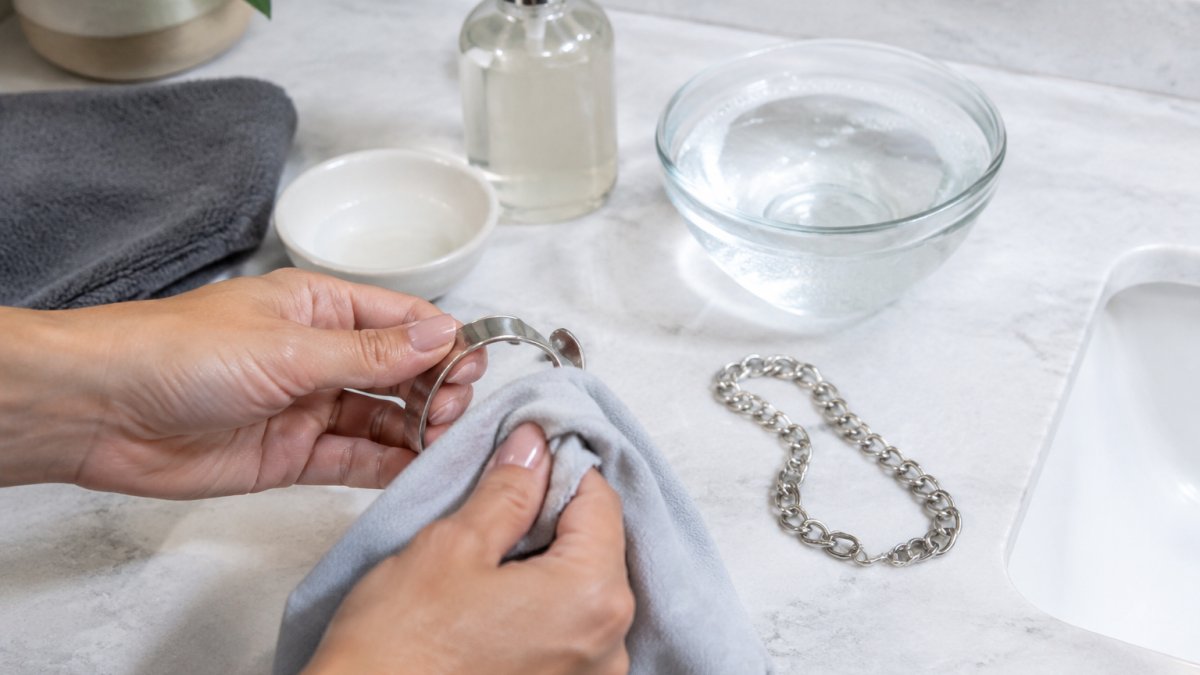
The basic method takes about five minutes and three items:
- Mix a drop of mild dish soap into a bowl of warm water.
- Soak the piece for two to three minutes to loosen residue.
- Wipe gently with a soft microfiber cloth, working around stones, clasps, and links.
- Rinse with clean water to remove soap film.
- Dry fully with a dry cloth before storing.
That method is safe for bare stainless steel. The cautions depend on what is on the piece:
- Polished bare steel: Safe with the basic method. Avoid abrasive pads, steel wool, and scouring powders, they scratch the polished surface permanently and leave microscopic grooves where residue collects.
- Brushed or matte finishes: Wipe in the direction of the brush lines. Circular scrubbing can leave visible swirl marks.
- Gold-plated stainless steel: The steel base is durable, but the plating is a thin layer that wears with friction. Skip ultrasonic cleaners, abrasive cloths, and harsh chemicals. Use the basic method and dry immediately.
- PVD-coated or colored steel: These coatings are harder than plating but can chip if struck. Avoid sharp tools and abrasive cleaners. Mild soap and a soft cloth are enough.
- Pieces with stones or cubic zirconia: Avoid soaking for long periods and skip ultrasonic cleaners if the setting is glued rather than prong-set. Warm water and a soft brush around the setting are safer.
What to avoid across the board: bleach, chlorine-based cleaners, ammonia, acetone, and abrasive polishes. These can attack the oxide layer, dull the finish, or degrade coatings.
Watch out: scrubbing a dull spot with an abrasive pad to "fix" it can scratch the polished finish permanently, always start with the gentlest method and escalate only if residue remains.
For a full walkthrough with material-specific cautions, see our step-by-step guide on how to clean stainless steel jewelry.
Shop Pieces Built to Resist Tarnish
The best defense against stainless steel tarnish is buying the right piece from the start. GRISÉ NYC offers stainless steel jewelry with waterproof, tarnish-resistant finishes.
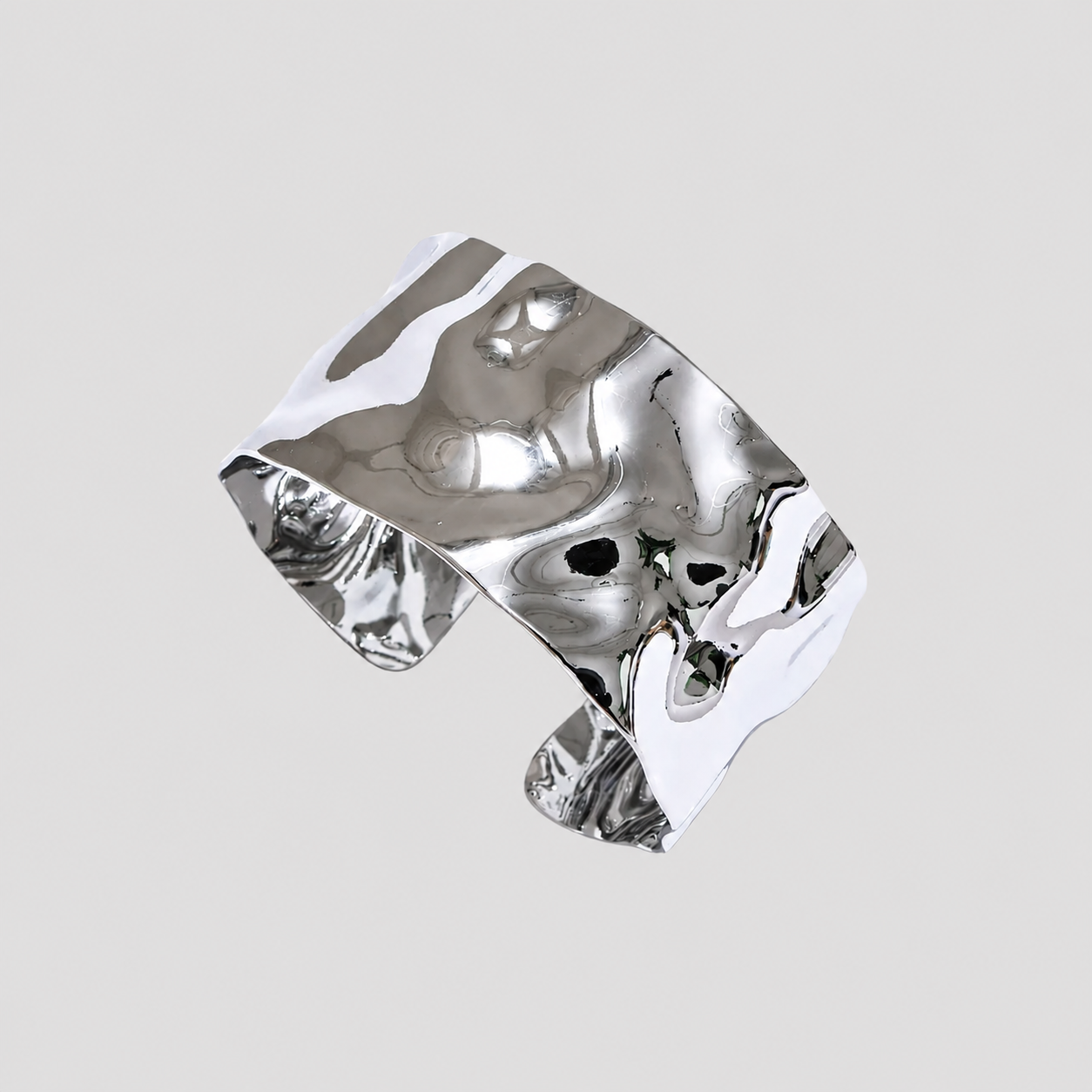
Our Aztec Steel Cuff Bracelet is a hand-hammered stainless steel cuff with an open fit, priced at $74.00. It handles daily wear without fuss.
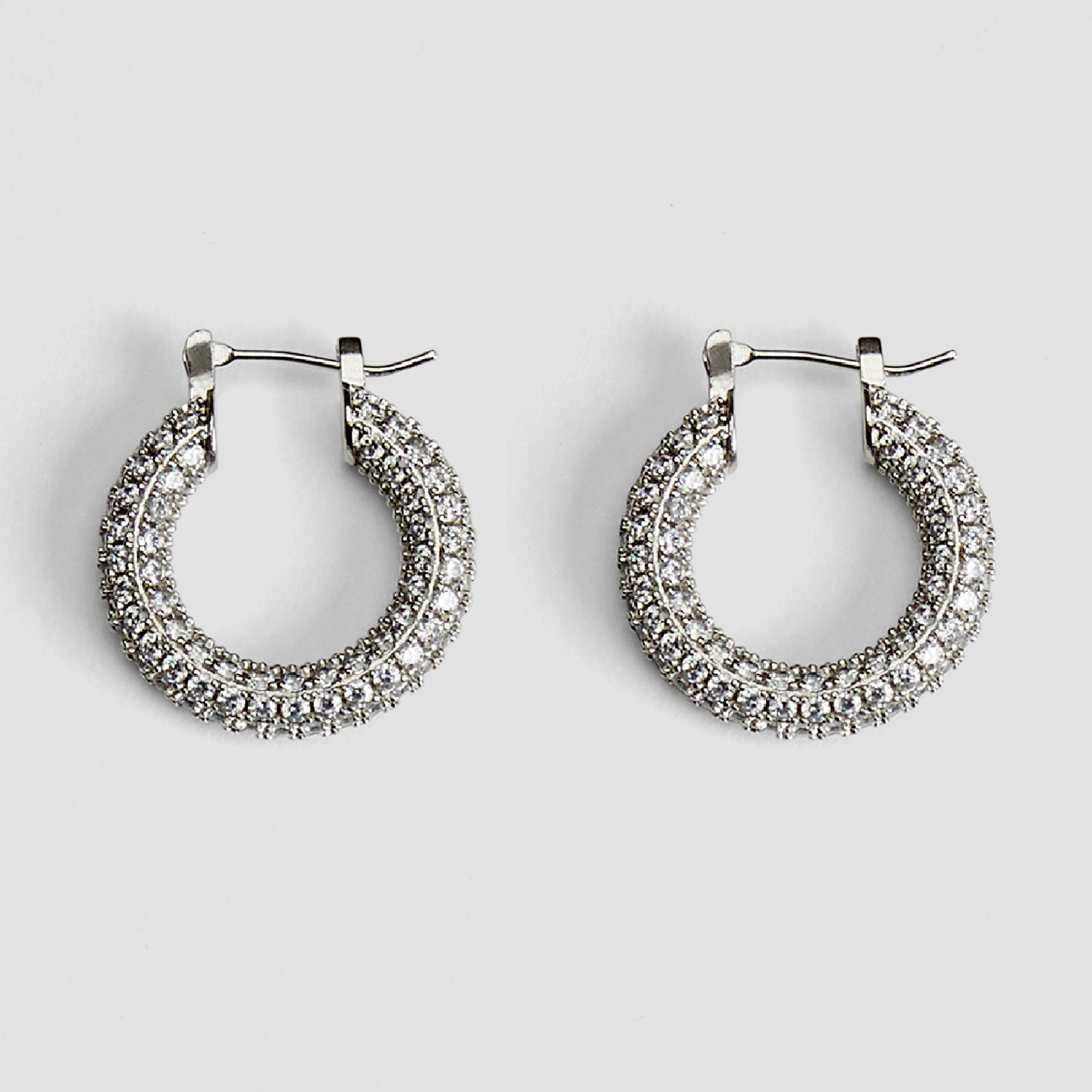
The Iced Pavé Medium Steel Hoop Earrings pair cubic zirconia with stainless steel for $74.00. They are hypoallergenic and waterproof.
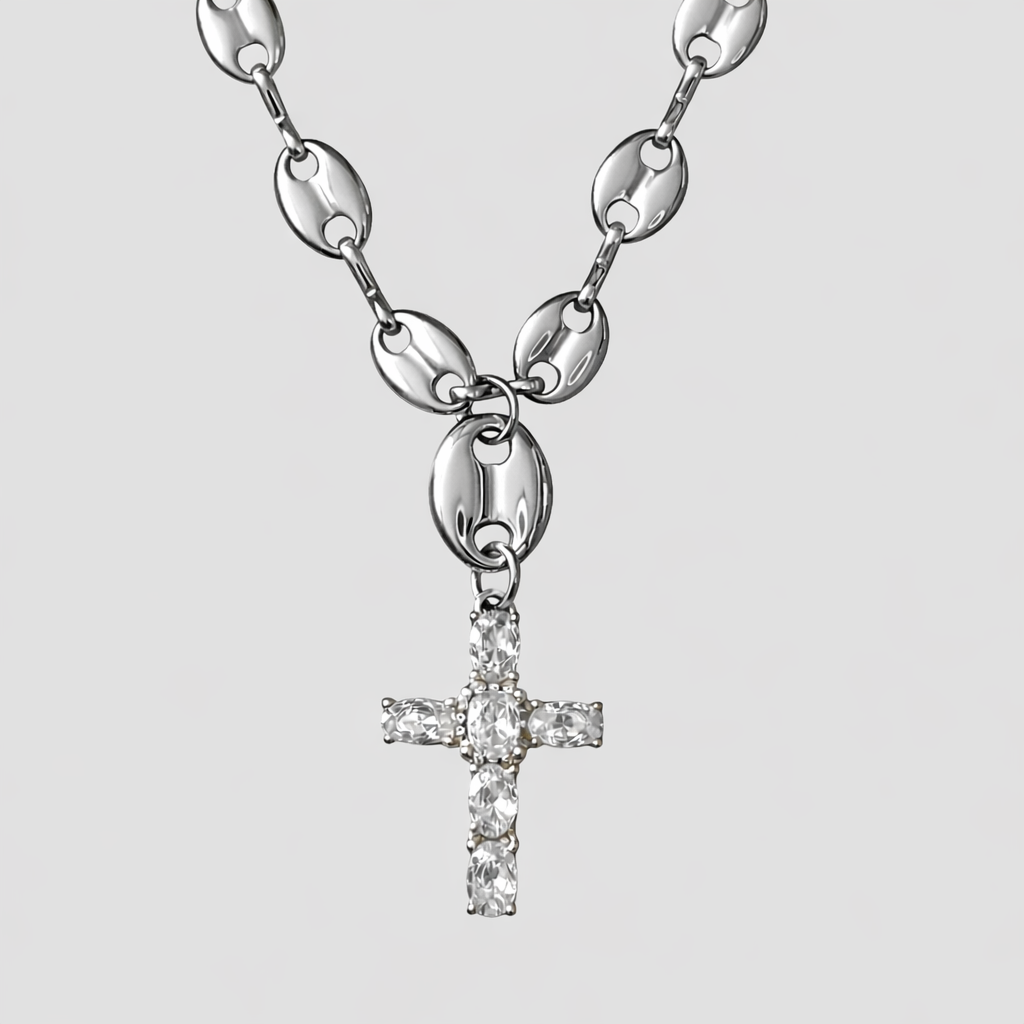
For a layered look, the Mariner Link Cross Pendant Stainless Steel Necklace is waterproof and tarnish-resistant at $84.00.
Stainless steel is not magic, but it is one of the most reliable metals you can wear every day.
At GRISÉ NYC, we make that easy with 18k gold-plated and stainless steel jewelry built for real life. Our pieces are waterproof, tarnish-resistant, and designed for stacking.
Frequently Asked Questions
Does stainless steel jewelry rust or tarnish?
Stainless steel jewelry resists both, but neither is impossible. The chromium in the alloy forms a protective oxide layer that blocks the corrosion that causes rust, which is why stainless steel holds up far better than sterling silver or brass. Tarnish, a dulling or discoloration of the surface, can still appear when the metal sits in moisture, sweat, chlorine, or chemicals for long stretches. A stainless steel panel can show pitting and discoloration under harsh conditions, so treat resistance as a strong advantage rather than a guarantee.
Can I shower or swim in stainless steel jewelry?
Showering is generally fine for stainless steel, and waterproof pieces like the Mariner Link Cross Pendant Necklace are built for daily wear. Pools and salt water are a different story. Chlorine and chloride are the chemicals most likely to attack the oxide layer, and repeated exposure shortens the life of any finish. Rinse your pieces with fresh water right after a swim, dry them fully, and skip the pool on days you want to protect plated or colored surfaces.
Does stainless steel turn skin green?
Stainless steel itself does not turn skin green. The green mark comes from copper or nickel in cheaper alloys reacting with your sweat, or from plating that has worn away. Solid stainless steel and 18k gold-plated stainless steel are far less likely to leave a mark, and hypoallergenic pieces such as the Iced Pavé Medium Steel Hoop Earrings are made with sensitive skin in mind. If a piece does leave a green tint, the plating or an underlying metal is usually the cause, not the steel.
How long does it take for stainless steel to tarnish?
There is no fixed timeline. A well-made stainless steel piece worn normally and cleaned regularly can look the same for years, while a piece exposed to chlorine, salt water, perfume, and lotion daily may show dulling within months. The practical rule is that tarnish on stainless steel is driven by exposure and care, not by a countdown clock.


