


Last Updated: October 23, 2026
Quick Summary
To keep gold jewelry shiny, clean it weekly with mild dish soap and warm water, then dry immediately with a microfiber cloth to remove buildup from lotions, perfumes, and body oils. Store pieces in airtight containers and remove jewelry before swimming, workouts, and applying cosmetics to prevent dullness and oxidation.
- Clean gold jewelry every 1-2 weeks with mild soap and water for daily-wear pieces
- Dry immediately with a lint-free microfiber cloth to prevent oxidation and water spots
- Remove jewelry before swimming, workouts, and applying lotions or perfumes to prevent buildup
- Store in airtight containers away from humidity, heat, and direct sunlight
- Have pieces professionally cleaned once a year to restore maximum shine and check for damage
Table of Contents
- Why Gold Jewelry Loses Its Shine
- How to Clean Gold Jewelry: The Right Way
- How Often to Clean Gold Jewelry
- How to Prevent Gold Jewelry from Tarnishing
- How to Care for Gold-Plated Jewelry
- When to Seek Professional Cleaning
- Keep Your Gold Jewelry Shiny Year-Round
- Frequently Asked Questions
Why Gold Jewelry Loses Its Shine
Gold jewelry loses its luster over time, but learning how to keep gold jewelry shiny isn't about preventing tarnish. According to Tulane University research on gold tarnish resistance, atoms on certain gold surfaces naturally rearrange themselves into a structure that resists tarnish.
Daily wear exposes your jewelry to lotions, perfumes, cosmetics, and body oils. These create invisible layers that accumulate on the surface, dulling the shine. At GRISÉ NYC, we understand that keeping gold jewelry shiny isn't about preventing tarnish, it's about managing buildup.

The good news: proper care can help maintain original luster over time. This means your favorite pieces can stay radiant for years with the right maintenance routine.
How to Clean Gold Jewelry: The Right Way
The safest way to clean gold jewelry uses items you already have at home. Gentle cleaning removes buildup without damaging the metal or any stones. But "gentle" means different things depending on the karat and on what is set into the gold, so the method below is built around those two variables rather than a single one-size routine.
Step 1: Match the Method to the Karat
Gold purity changes how much handling the piece will tolerate. Pure gold (24k) is soft enough to scratch with a fingernail, while 10k gold is alloyed with enough harder metals to hold up to more handling. A common pattern jewelers describe:
- 24k (99.9% gold): The softest and most scratch-prone. Skip the brush entirely on polished surfaces and rely on soaking plus a microfiber wipe. Store it in its own pouch so it never rubs against harder pieces.
- 18k (75% gold): Still soft, but durable enough for a soft brush on textured areas. Use light pressure and avoid scrubbing prongs.
- 14k (58.3% gold): The most common U.S. jewelry standard and the most forgiving of the four. A soft toothbrush is fine on crevices; just don't bear down.
Higher-purity pieces need less friction and more patience; lower-purity pieces need more attention to what they're exposed to.
Step 2: Gather Your Cleaning Supplies
You need just four things:
- Mild dish soap (regular brand works fine)
- Warm water (not hot)
- Soft-bristled brush (an old toothbrush works, use it only on 14k, 10k, and textured 18k pieces)
Skip harsh chemicals, abrasive scrubbers, and bleach. These damage gold plating and can harm gemstones. Keep your supplies simple.
Step 3: Soak Your Gold Jewelry
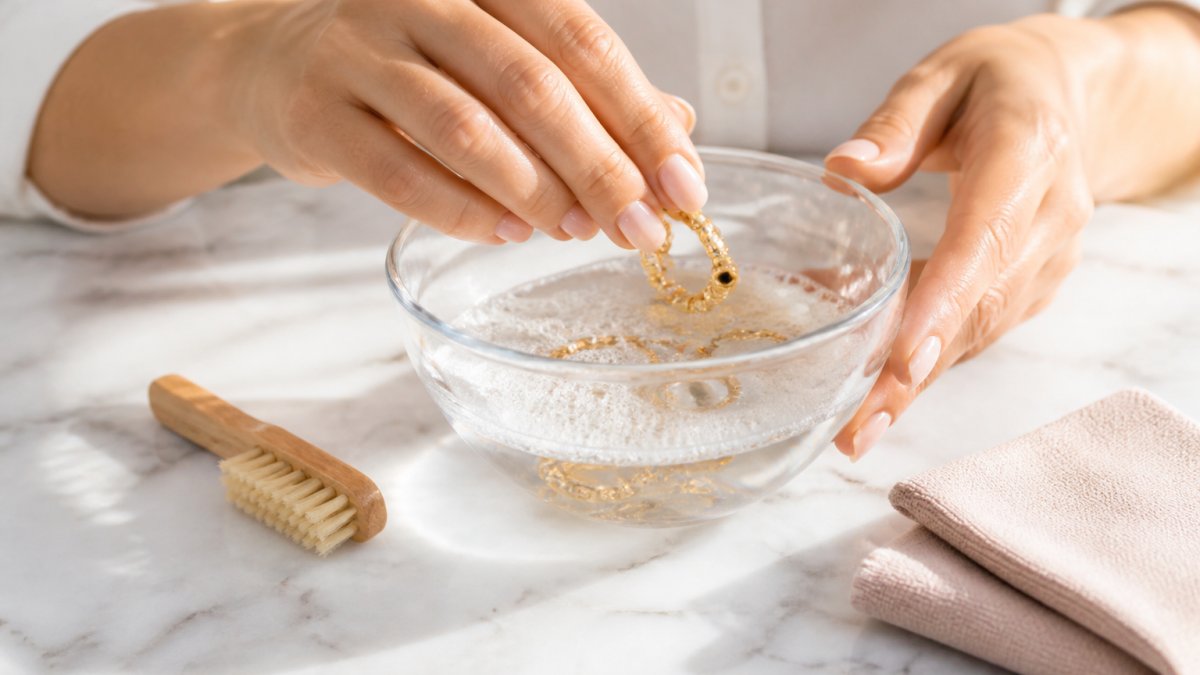
Fill a small bowl with warm water and add a few drops of mild dish soap. Place your jewelry in the solution and let it soak for 10 to 20 minutes, according to guidance from Fink's Jewelers.
For pieces with delicate gemstones, reduce soaking time to 10 minutes. For solid gold or stainless steel pieces, the full 20 minutes works well.

Step 4: Check the Stones Before You Brush
This is the step most guides skip. The gold may be fine and the stone may not be. Before any brushing or soaking, identify what is set in the piece:
- Pearls and opals: Porous and chemically sensitive. Do not soak them, do not brush them, and keep them away from soap residue. Wipe the gold around them with a barely damp cloth and dry immediately.
- Emeralds: Typically treated with oils or resins, and soaking can pull that treatment out. Clean the gold only, with a damp cloth, and never use an ultrasonic machine.
- Diamonds, sapphires, and rubies: Durable enough for the full soap-and-water soak and a soft brush, but check that prongs are tight first, a loose stone plus a brush is how stones go down the drain.
If you can't identify the stone, treat it as porous and clean the gold around it rather than the whole piece.
Step 5: Gently Brush and Rinse
Remove jewelry from the soapy water and use your soft-bristled brush to gently scrub away buildup. Focus on crevices and textured areas where residue hides. Use light, circular motions, never scrub hard.
Rinse thoroughly under lukewarm running water until all soap is gone. Soap residue left behind will dull your jewelry again. Make sure water runs clear before moving to the next step.
Step 6: Dry Properly to Prevent Oxidation
This step matters more than most people realize. Air drying can encourage oxidation if your gold isn't pure, according to guidance from Good Housekeeping. Instead, use a lint-free microfiber cloth to dry immediately and completely.
Pat your jewelry dry gently. Don't rub aggressively. Make sure no water spots remain. Store your pieces right away in a clean, dry place.
How Often to Clean Gold Jewelry
The frequency of cleaning depends on how often you wear your pieces. Light cleaning is recommended every 1-2 weeks for daily-wear jewelry, according to Gabriel & Co. Deep cleaning is recommended once a month.
Here's a realistic schedule:
| Cleaning Type | Frequency | What It Does |
|---|---|---|
| Light cleaning | Every 1-2 weeks | Removes daily buildup |
| Deep cleaning | Once a month | Targets stubborn residue |
| Professional cleaning | Once a year | Restores maximum shine |
For pieces you wear daily, weekly light cleaning keeps them radiant. For occasional-wear jewelry, monthly deep cleaning is enough. Professional cleaning once a year ensures your pieces stay in top condition and lets experts check for loose stones or damage.
How to Prevent Gold Jewelry from Tarnishing
Prevention is easier than restoration. Smart habits help you keep gold jewelry shiny without constant maintenance, and the habits that matter most depend on whether you're wearing solid gold, a plated piece, or gold with set stones.
Avoid Chemical Exposure
Lotions, perfumes, and cosmetics are the leading cause of dullness. Apply these products before putting on your jewelry. Let them dry completely.
Chlorine from swimming pools and hot tubs damages gold plating. Remove jewelry before swimming.
Harsh household cleaners, bleach, and strong soaps speed up oxidation. Wear gloves when cleaning, or remove your jewelry entirely.
Freshwater Pearl Single Ear Cuff →
What changes by karat: lower-karat gold (10k and 14k) contains more alloyed metals like copper and silver, which are the parts that actually react to chlorine and sulfur.
Store in Airtight Containers
Proper storage prevents unnecessary oxidation and scratches. Use zip bags or jewelry boxes with tight seals. Air exposure accelerates oxidation, especially for gold-plated pieces.
Keep jewelry away from:
- Direct sunlight
- High humidity
- Temperature fluctuations
A simple zip bag in a drawer works perfectly. For pieces you wear frequently, a small jewelry box keeps them protected and organized.
Store by hardness, not just by type. Keep 24k and 18k pieces in their own soft pouches so they don't rub against harder 10k or 14k pieces, and keep plated jewelry separate from solid gold and sterling silver so the plating isn't abraded by neighboring metal.
Remove Jewelry During Physical Activity
Active lifestyles demand active jewelry protection. Remove your pieces before:
- Workouts and gym sessions
- Sports or outdoor activities
- Heavy lifting or manual work
Sweat, chlorine, and impact all damage jewelry. GRISÉ NYC designs jewelry for bold lifestyles, which is why our 18k gold-plated stainless steel pieces are waterproof and tarnish-free, but even durable jewelry benefits from a break during intense activity.
Protect the Stones, Not Just the Gold
Prevention for gold jewelry with set stones is really prevention for the stone. A few habits make the biggest difference:
- Put jewelry on last and take it off first, so perfume, hairspray, and lotion never land directly on the stone.
- Don't wear pieces with pearls, opals, or emeralds in the shower, pool, or while cleaning, moisture and chemicals reach the stone even when the gold is fine.
- Have prongs checked once a year. A loose setting is the most common way a stone is lost, and it has nothing to do with how shiny the gold is.
Know When Prevention Isn't Enough
If a plated piece is already dulling despite good habits, the plating is wearing thin and no amount of cleaning will bring the shine back, that's a replating conversation with a jeweler, not a cleaning one. If solid gold stays dull after a proper clean, the buildup may be in crevices a cloth can't reach, which is the point to see a professional.
How to Care for Gold-Plated Jewelry
Gold-plated jewelry requires slightly different care than solid gold.
Use the same cleaning method as solid gold: mild soap, warm water, soft brush, and immediate drying.
Avoid wearing gold-plated pieces during water activities, workouts, or while applying lotions and perfumes.
Store gold-plated jewelry separately from solid gold or sterling silver pieces.
GRISÉ NYC's 18k gold-plated pieces are made with high-quality stainless steel bases.
When to Seek Professional Cleaning
Professional cleaning restores shine that home cleaning can't match. Once a year is ideal for pieces you wear frequently. Professionals use specialized equipment and solutions that are too strong for home use.
Visit a professional jeweler if:
- Your jewelry has stubborn buildup that won't come clean
- You notice loose stones or damaged settings
- Your pieces have intricate designs that trap residue
Professional inspection catches problems early. A jeweler can spot loose prongs, worn plating, or other issues before they become serious.
Keep Your Gold Jewelry Shiny Year-Round
Keeping gold jewelry shiny comes down to consistent, gentle care.
The key is prevention. Apply lotions and perfumes before wearing jewelry. Remove pieces during workouts, swimming, and physical activity.
Your favorite gold pieces deserve this simple routine. The effort takes minutes per week, and the payoff is jewelry that stays radiant for years.
Gold jewelry that looks as good as the day you bought it isn't a luxury, it's the result of smart care habits.
Frequently Asked Questions
Can I clean gold jewelry with dish soap?
Yes, mild dish soap and warm water is one of the safest ways to clean gold jewelry. Mix a few drops of gentle dish soap with warm water, soak your gold jewelry for 10 to 20 minutes, then gently brush with a soft-bristled brush. This method removes body oils and residue buildup without damaging the metal or gemstones. Rinse thoroughly and dry with a lint-free microfiber cloth to prevent oxidation.
How often should I clean gold jewelry?
Light cleaning is recommended every 1-2 weeks for daily-wear pieces, deep cleaning once a month, and professional cleaning once a year. The frequency depends on how often you wear the jewelry and your environment. Active individuals or those who wear jewelry in the gym or shower may need more frequent cleaning to prevent buildup of sweat and residue.
How do I prevent my gold jewelry from tarnishing?
Prevent tarnishing by avoiding chemical exposure from lotions, perfumes, and cosmetics before putting on jewelry. Store pieces in airtight containers or zip bags to minimize oxidation, remove jewelry during physical activity, and dry thoroughly after cleaning. Proper care can help maintain original luster over time.
Is gold-plated jewelry as durable as solid gold?
Gold-plated jewelry is durable when cared for properly, but the plating layer is thinner than solid gold. High-quality pieces like GRISÉ NYC's 18k gold-plated stainless steel jewelry are waterproof and tarnish-resistant for everyday wear. Avoid harsh chemicals and abrasive materials, and follow the same gentle cleaning methods as solid gold to extend the life of the plating.


