


Last Updated: October 30, 2026
Quick Summary
The safest way to handle how to clean tarnished gold plated jewelry is to use gentle methods, since the gold layer is thin. Wash with a few drops of mild dish soap in lukewarm water, wipe gently with a soft cloth, pat dry right away, and avoid harsh cleaners and long soaks.
- Mix a few drops of mild dish soap into lukewarm water for cleaning.
- Dry the piece right away with a clean towel to prevent moisture-driven tarnish.
- Avoid baking soda, vinegar, lemon juice, bleach, ammonia and hydrogen peroxide.
- Never use ultrasonic cleaners or steamers on gold-plated pieces.
- Replace silica gel packets when their indicator changes color.
Table of Contents
- Gold-Plated vs. Solid Gold: Why Tarnish Happens
- What You'll Need: Safe Cleaning Supplies
- How to Clean Gold Plated Jewelry Step by Step
- Can You Clean Gold-Plated Jewelry with Baking Soda?
- Gemstones, Pearls and Mixed Pieces: What Is Safe
- How to Prevent Gold-Plated Jewelry from Tarnishing
- When to Stop Cleaning and Repair or Replace Your Piece
- Frequently Asked Questions
How to clean tarnished gold plated jewelry safely comes down to one rule: use gentle methods, because the gold layer is thin. Gold-plated pieces are best protected by the care advice below. Most damage happens from harsh cleaners and long soaks, not from the cleaning itself.
Gold-Plated vs. Solid Gold: Why Tarnish Happens
Gold plating is a thin layer of gold bonded to a base metal (Buying Platinum, Gold, and Silver Jewelry). Solid gold is gold all the way through. That difference explains most tarnish problems.
Tarnish on gold-plated pieces usually comes from the base metal showing through as the plating wears. Sweat, lotion, perfume and humidity speed up that wear. Oxidation in the base layer can also cause the green or dull look many owners notice. For a closer explanation of why gold-plated jewelry turns green, see why gold plated jewelry turns green.
Watch out: Scrubbing hard to remove a dark spot can wear through the plating faster than the tarnish itself.
What You'll Need: Safe Cleaning Supplies
Gather these basics before you start:
- A soft microfiber cloth
- Mild dish soap
- A bowl of lukewarm water
- A soft, dry toothbrush for detailed areas
- A clean, dry towel for patting pieces dry
Skip baking soda, vinegar, lemon juice, bleach, ammonia and hydrogen peroxide. These can damage the thin gold layer and speed up corrosion.
How to Clean Gold Plated Jewelry Step by Step
Follow these steps in order for the safest results:
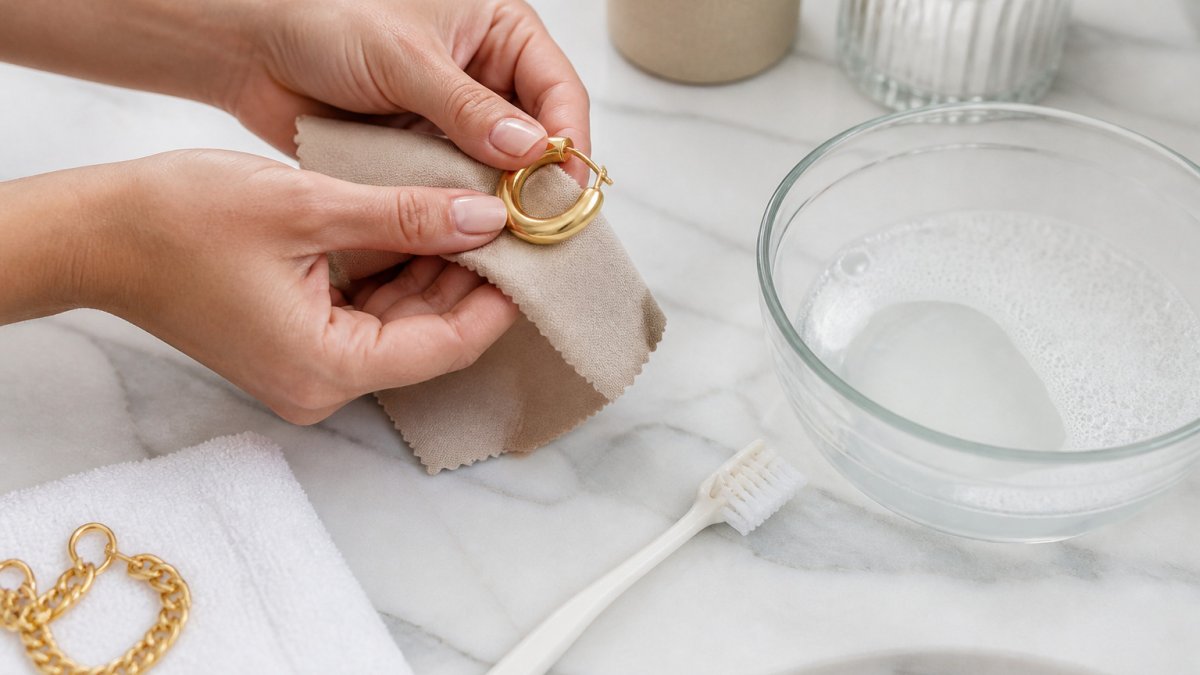
- Remove the piece before showering, swimming, or exercising.
- Mix a few drops of mild dish soap into a bowl of lukewarm water.
- Dip a soft cloth into the mixture and wring it out well.
- Gently wipe the piece. Use the toothbrush for crevices and settings.
- Rinse briefly under lukewarm water, or wipe with a clean damp cloth.
- Pat dry right away with a towel.
Avoid hot water and long soaking. Moisture trapped under clasps or in stone settings can speed up tarnish.
Drying and Polishing Without Scratching
Dry each piece fully before storing it. Use a clean microfiber cloth and light, even strokes. Do not rub hard, and never use abrasive polishing cloths or paste on plated surfaces. Let the piece air-dry for a few minutes if it still feels damp in tight spots.
The safe cleaning process follows six steps, each with a clear action and timing.
| Step | What to do | Time or frequency |
|---|---|---|
| 1 | Remove the piece before showering, swimming or exercising | Before activity |
| 2 | Mix a few drops of mild dish soap into lukewarm water | Before cleaning |
| 3 | Dip a soft cloth in the mixture and wring it out well | Before wiping |
| 4 | Gently wipe the piece; use a toothbrush for crevices | Light, gentle strokes |
| 5 | Rinse briefly under lukewarm water or wipe with a damp cloth | Brief rinse |
| 6 | Pat dry right away with a towel | Immediately |
Can You Clean Gold-Plated Jewelry with Baking Soda?
Baking soda is not recommended for gold-plated jewelry, because its grit can scratch the thin plating. Stick with mild soap and water instead.
Gemstones, Pearls and Mixed Pieces: What Is Safe
It is not. The metal, the stone, and the glue or setting holding them together each respond differently to soap, water, and time. This is the part of plated-jewelry care that generic advice skips, and it is where most accidental damage happens.
The core rule: clean the metal, protect the stone. When a piece mixes gold plating with any stone you are unsure about, wipe only the metal with a damp cloth and leave the stone alone.
Stones that should never be soaked
Porous and organic stones absorb water and soap, which can cloud them, change their color, or weaken the material over repeated exposure:
- Pearls, soft, porous, and sensitive to soap residue and perfume. Wipe with a soft dry cloth only; never soak. For yellowed pearls, expert pearl restoration methods explain safe ways to bring back their luster.
- Turquoise, porous and often stabilized with resin or wax that soap and water can degrade.
- Opal, contains water within its structure and can craze or crack with sudden moisture or temperature changes.
- Lapis lazuli, malachite, and coral, porous or acid-sensitive; soap and repeated wetting dull the surface.
- Amber and bone, organic materials that soften or discolor with prolonged water exposure.
Stones that tolerate a quick wipe but not a soak
- Emerald, typically oiled or resin-filled; soaking can pull the treatment out and make inclusions more visible.
- Garnet, peridot, and tourmaline, harder than pearls but still sensitive to hot water and sudden temperature shifts.
- Glued stones of any kind, water can dissolve or soften the adhesive, especially in older or costume pieces.
Stones that are generally safe with a brief, gentle wash
- Diamond, sapphire, ruby, and quartz, hard and non-porous, so a quick lukewarm soap wash is fine. The risk here is not the stone but the plating around it, so keep the wash brief and dry immediately.
Check the setting before you wet the piece
Before cleaning any mixed piece, look at how the stones are held:
- Prong settings can snag a cloth or toothbrush; use a soft brush and light pressure.
- Bezel and channel settings trap water and soap residue; dry with a microfiber cloth and let the piece air out fully.
- Glued settings (common in plated and costume jewelry) are the most vulnerable. If you can see adhesive around the stone, do not submerge the piece at all.
How to Prevent Gold-Plated Jewelry from Tarnishing
Prevention is where plated jewelry is won or lost. Tarnish is not a single event; it is the cumulative result of moisture, oils, and abrasion sitting on the base metal after the thin gold layer has worn. The habits below address each cause, and the schedule at the end turns them into a routine rather than a reaction.
Understand what you are fighting
Three forces wear down gold plating:
- Moisture, sweat, humidity, and water trapped under clasps or in settings promote oxidation of the base metal.
- Chemicals, perfume, lotion, sunscreen, hairspray, and chlorinated water can react with the plating and the base layer beneath it.
- Abrasion, friction from other jewelry, keys, or a rough cloth slowly thins the gold layer.
Every prevention habit below targets one of those three.
Daily habits (under a minute)
- Last on, first off. Put jewelry on after perfume, lotion, and hair products have dried, and take it off before exercise, showering, swimming, or cleaning.
- Wipe after every wear. A dry microfiber cloth removes skin oils and sweat before they sit on the surface overnight.
- Keep pieces separate. Store each piece in its own small pouch or compartment so clasps and chains do not rub against each other. To keep the box itself clean, see expert care techniques for cleaning a jewelry box.
Storage that actually slows tarnish
- Airtight beats open. A small zip-top bag or a lined, closed jewelry box limits exposure to humid air.
- Silica gel packets help. A single packet in a jewelry drawer or box absorbs ambient moisture; replace it when the indicator (if present) changes color.
- **
- Avoid the bathroom. Steam from showers is one of the most common causes of tarnish in stored jewelry.
A simple maintenance calendar
A light, predictable routine tends to work better than occasional deep cleaning:
- After every wear, wipe with a dry microfiber cloth and return to storage.
- Weekly, inspect clasps, settings, and high-friction areas for dullness or a color shift.
- Every few weeks, gentle wash with mild dish soap and lukewarm water, then dry fully (see the step-by-step section above).
- Monthly, check storage for humidity, replace silica packets if needed, and separate any pieces that have been sharing a compartment.
- Seasonally, review pieces you have not worn; store them clean and dry rather than putting them away dirty.
Know when prevention is no longer enough
If the base metal shows through in patches, if the plating flakes, or if the green tint returns within days of cleaning, the plating has worn past what habits can protect. At that point, repair or replating is the realistic option, and the prevention routine above is what keeps the new finish intact.
When to Stop Cleaning and Repair or Replace Your Piece
If the plating is flaking, the base metal shows through in large patches, or the green color keeps returning after gentle cleaning, the plating has likely worn too far for cleaning to help. Repair or replacement may be the more practical option.
Frequently Asked Questions
How do you revive tarnished gold-plated jewelry?
Start with a gentle wash: mix a few drops of mild dish soap into warm water, dip a soft cloth or soft toothbrush, and wipe the piece without soaking it. Rinse quickly, pat dry with a microfiber cloth and buff lightly. Avoid hot water, harsh polishes and abrasive scrubbing, since they can wear through the thin gold layer. If the tarnish is dark or the plating is flaking, cleaning may not restore it, and a jeweler can advise on options.
Can you clean gold-plated jewelry with baking soda?
It is not recommended. Baking soda is mildly abrasive, and scrubbing with it can wear away the thin gold layer and expose the base metal underneath. A soft cloth with mild soap and warm water is the safer choice for everyday cleaning.
What is the safest way to clean gold-plated jewelry?
The safest method is to use lukewarm water with a drop of mild soap, clean with a soft cloth, rinse briefly, and dry immediately with a microfiber cloth. Avoid soaking, ultrasonic cleaners, bleach, ammonia and household acids. Clean pieces after wearing them and before storing them so that sweat, lotion and perfume do not sit on the surface.
How can you prevent gold-plated jewelry from tarnishing?
Keep pieces dry and store them in an airtight container or a lined jewelry box away from humidity. Put jewelry on after applying perfume, lotion and hair products, and take it off before swimming, showering or exercising when possible. Wiping pieces after each wear and cleaning them regularly with mild soap slows the buildup that leads to tarnish.


